He Came Home Alive. The Government Spent 27 Years Disagreeing.

Photo: Joe Haupt from USA, CC BY-SA 2.0, via Wikimedia Commons
There's a particular kind of frustration that comes from being told you don't exist by someone who is looking directly at you. Most of us will never experience it. One Korean War veteran lived inside that frustration for the better part of three decades.
 Photo: Korean War, via lingopie.com
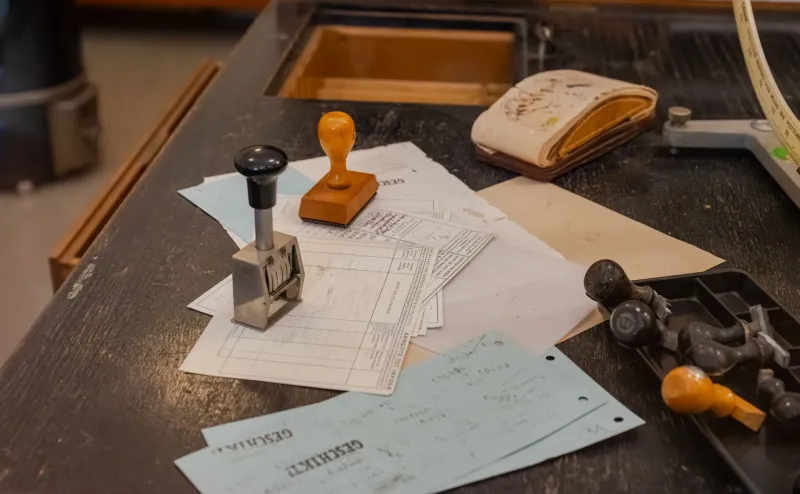
His name was buried in military records under the cold, bureaucratic stamp of "Killed in Action." His body, however, never got the memo.
A Clerical Error With Consequences Nobody Anticipated
During the chaos of the Korean War, military record-keeping was an exercise in controlled disaster. Units moved fast, communications broke down, and casualty reports were filed under pressure and often without verification. Somewhere in that fog of paperwork, a clerical worker made a mistake that would haunt one soldier for the rest of his life — they marked him dead.
The soldier — let's call him by the role he was forced to play for decades: the living ghost — had been separated from his unit during a particularly brutal engagement. He was eventually recovered, reassigned, and sent home at the end of his service. Routine. Unremarkable. Except that nobody corrected the file.
By the time he got back to the States, shook hands with his family, and started thinking about buying a house, the United States government had already held a paper funeral for him.
 Photo: United States, via s3.mordorintelligence.com
The Mortgage That Shouldn't Have Existed
Here's where the story gets genuinely strange. Despite his official status as a deceased person, he managed to secure a mortgage. Banks in the postwar era weren't yet wired into the web of federal databases that would eventually make that kind of oversight impossible. A man with a pulse, a job, and a down payment was a man with a mortgage. So he bought a house. He moved in. He made payments.
For a while, life proceeded with something approaching normalcy.
Then the letters started arriving.
The IRS, notified of his death through military channels, had quietly closed his tax file. When he tried to file returns, the agency's response was essentially a bureaucratic shrug — their records showed he was dead, and dead men don't file taxes. Except he kept filing anyway, because the alternative was tax evasion, and it turns out the IRS is equally unhappy whether you're alive or dead and not paying.
The Social Security Administration presented a different flavor of the same problem. His contributions existed. His account existed. He, officially, did not. Attempts to access benefits he had earned were met with the kind of institutional confusion that only a government agency can produce with a straight face.
The Paper War
What unfolded over the next 27 years was less a legal battle than a slow-motion siege. The soldier — who was, to be abundantly clear, alive and breathing and mowing his lawn and attending church and doing all the things living people do — had to repeatedly prove his existence to systems that had no mechanism for accepting that proof.
Correcting a death record in the federal system required documentation. The documentation had to be verified. Verification required matching records. The matching records said he was dead. It was a loop with no obvious exit.
He hired lawyers. He wrote letters. He appeared in person at government offices, which one can only imagine produced some memorable conversations. At various points, different agencies acknowledged his living status for their own purposes while other agencies continued treating him as deceased. The IRS eventually accepted his returns. The military records took considerably longer.
Meanwhile, he kept paying that mortgage. Month after month, year after year, a dead man making payments on a house he very much lived in.
Why Bureaucracy Struggles With Biological Facts
The deeper strangeness of this story isn't the original error — mistakes happen, especially in wartime. It's how long the error persisted against overwhelming evidence to the contrary.
Government systems, particularly mid-century American ones, were designed around the assumption that records, once filed, reflected reality. There wasn't much infrastructure for reversing a death declaration. The process of proving you were alive was, paradoxically, harder than the process that had declared you dead — because death only required a single form filled out by a single clerk, while resurrection required navigating an entire ecosystem of agencies, each with its own rules, timelines, and institutional skepticism.
The soldier's case wasn't unique in kind, only in duration. Similar situations cropped up throughout the postwar period, enough that Congress eventually took notice and pushed for reforms in how military casualty records were maintained and corrected.
The Quiet Resolution
After nearly three decades, the records were finally corrected across all relevant federal agencies. His death was officially un-declared. He was, in the eyes of the United States government, alive.
He had been alive the entire time, of course. He'd just been waiting for the paperwork to catch up.
The house was paid off by then. He'd made every single payment — 27 years of monthly checks from a man the government had already buried. If that doesn't qualify as dedication to homeownership, it's hard to know what would.
The story is funny, until you sit with it long enough to feel the edges of it. A man who served his country, came home, and spent the next three decades fighting not an enemy but a filing system. The war ended. The paperwork didn't.