He Was Still Fighting a War That Ended Before His Daughter Was Born

Here's a sentence that sounds like the setup to a bad joke: a soldier spent 29 years fighting a war that had already ended, and the only thing that finally stopped him was his original commanding officer flying in from Japan to personally deliver the news.
That's not a joke. That's the true story of Hiroo Onoda.
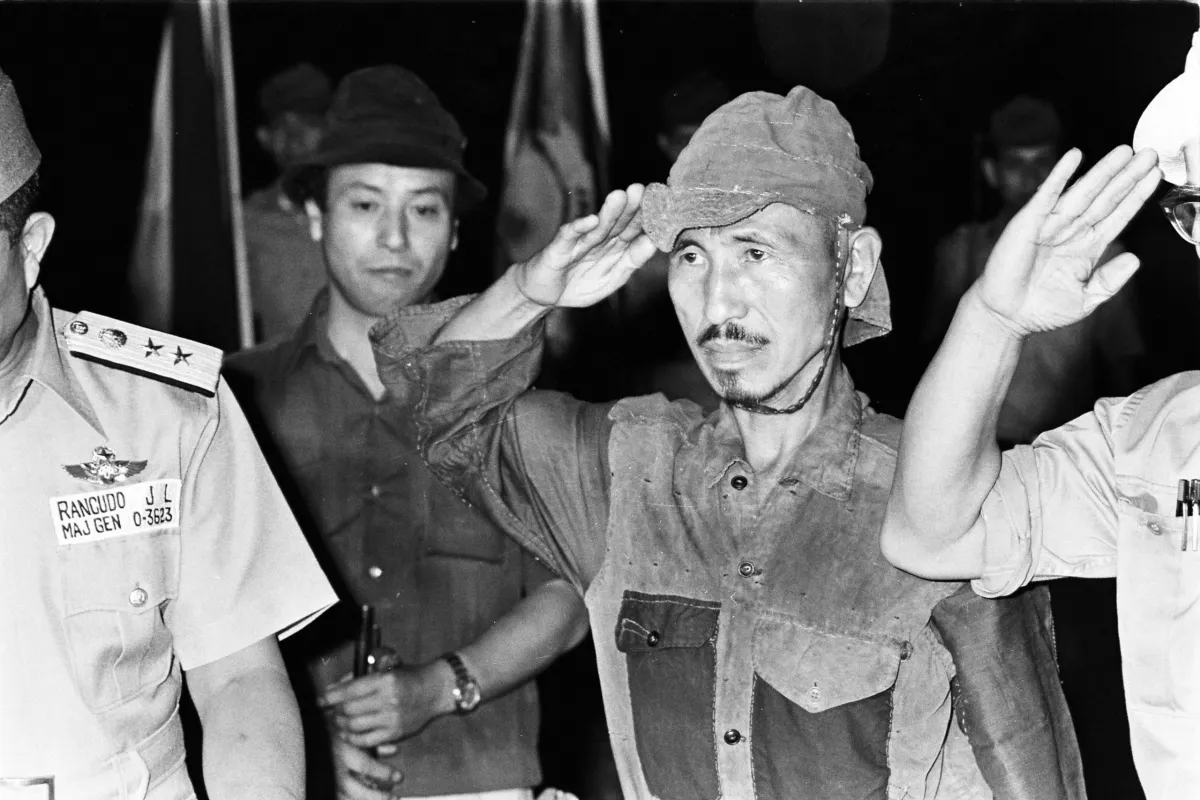 Photo: Hiroo Onoda, via www.historynet.com
The Mission That Never Officially Ended
Onoda was a Japanese intelligence officer, trained in guerrilla warfare and deployed to Lubang Island in the Philippines in December 1944. His orders were simple and absolute — hold the island, disrupt enemy operations, and under no circumstances surrender. He was explicitly told that no matter what happened, no matter what he heard, he was to continue fighting until he received a direct order from his commanding officer.
 Photo: Lubang Island, via i.ytimg.com
Those orders would define the next three decades of his life.
When Japan surrendered in August 1945, Onoda didn't believe it. When leaflets were dropped over the jungle announcing the war's end, he dismissed them as Allied propaganda. When newspapers were left at the edges of the forest with headlines confirming Japan's defeat, he assumed they were forgeries. The logic was airtight, from the inside: his orders said fight, so he fought. Anything suggesting otherwise was an enemy trick.
He wasn't alone at first. A small group of soldiers shared the jungle with him through the late 1940s. One by one, they either surrendered or were killed. By 1972, Onoda was the last one left.
Reality Kept Knocking. He Kept Not Answering.
This is the part of the story that's genuinely difficult to wrap your head around. The world didn't just forget about Onoda — it actively tried to reach him.
In 1959, Japan officially declared him dead in absentia. Search parties entered the jungle. His family recorded personal messages that were broadcast into the trees. Former comrades came to the island and called out for him. Each time, Onoda either didn't hear, didn't believe, or interpreted the contact as another deception.
From his perspective, this made complete sense. He had been trained to distrust exactly this kind of psychological operation. The more convincing the evidence looked, the more suspicious he became. He was, in the cruelest possible way, extremely good at his job.
Meanwhile, he kept moving. He raided villages for food, occasionally skirmished with Philippine police, and maintained a meticulous log of his activities. He wasn't deteriorating into madness — he was operating with discipline and purpose. He genuinely believed the war was ongoing and that he was still serving his country.
By the early 1970s, the Philippine government had classified him as a significant security problem. Farmers near his territory lived in fear. Estimates suggest that over the course of his 29-year campaign, Onoda's activities resulted in the deaths of more than 30 people.
The One Thing That Could Actually Work
In 1974, a young Japanese adventurer named Norio Suzuki set out into the Philippine jungle with a goal that most people considered insane: find Hiroo Onoda. Suzuki actually succeeded, making contact with the soldier after just a few days of searching.
Onoda was willing to talk. But he held firm on one point — he would not stand down without a direct order from his commanding officer, Major Yoshimi Taniguchi.
 Photo: Major Yoshimi Taniguchi, via historiamilitaremdebate.com.br
Suzuki returned to Japan and delivered that message. The Japanese government tracked down Taniguchi, who had since retired and was working as a bookstore owner. He agreed to make the trip.
On March 9, 1974, Taniguchi flew to Lubang Island, walked into the jungle, and formally relieved Hiroo Onoda of his duty. Onoda, dressed in his deteriorating uniform, his rifle still functional, surrendered his weapon to Philippine President Ferdinand Marcos.
He was 52 years old. He had been fighting, alone, for 29 years.
The Collision Between Belief and Reality
What makes Onoda's story so genuinely strange — beyond the obvious logistics of surviving three decades in a jungle — is what it reveals about the power of a framework. Onoda didn't lack information. He received plenty of it. What he lacked was any reason, within his existing belief system, to trust that information.
Every piece of evidence that the war had ended was filtered through a worldview that said: the enemy lies, your orders are sacred, and surrender is not an option. In that framework, a newspaper announcing Japan's defeat isn't news. It's a weapon.
The only thing that could break through wasn't evidence. It was authority. The same system that locked him in also held the only key.
Onoda returned to Japan to a reception that was equal parts hero's welcome and national reckoning. He had followed his orders with absolute fidelity. He had also, in doing so, killed people who had no idea a war was still happening. He moved to Brazil not long after his return, later establishing a nature school for young people in Japan. He died in 2013 at the age of 91.
The war he fought ended in 1945. The war inside his head took considerably longer.
And the strangest part? He wasn't wrong about the orders. He was just the last person on earth still following them.