One Sergeant, One Signature, One Entire Navy: The Paperwork Blunder That Made a GI an Accidental Admiral
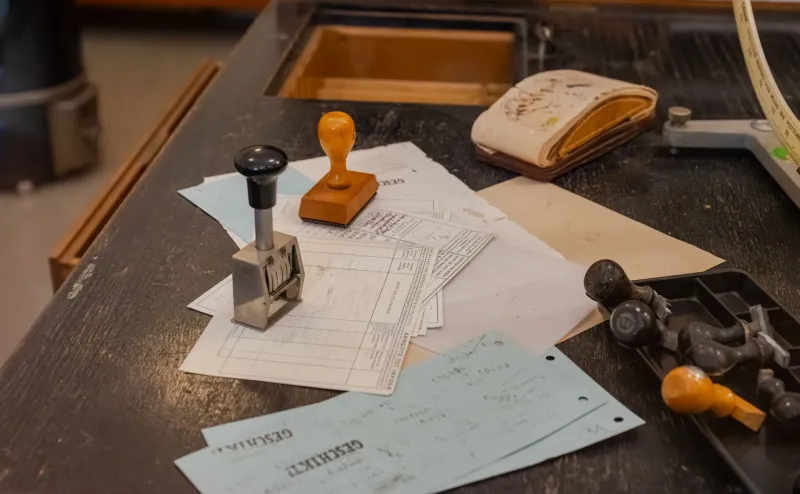
There's a particular flavor of absurdity that only bureaucracy can produce. It doesn't require malice, incompetence, or even bad intentions. Sometimes all it takes is a misplaced form, a rubber stamp applied one desk too early, and a clerical chain reaction that nobody catches until the damage — or in this case, the ownership — is already done.
That's more or less what happened in the months following the end of World War II, when Allied command was working overtime to sort out who owned what across a continent that had just spent six years destroying itself.
The World's Most Complicated Yard Sale
The post-WWII reorganization of Allied military assets was, by any honest measure, one of the most complicated logistical undertakings in modern history. Warships, vehicles, weapons depots, and communication equipment had been pooled, loaned, leased, and transferred between Allied nations under a patchwork of agreements that were drafted fast and filed faster. When the fighting stopped, somebody had to unwind all of it.
That somebody turned out to be thousands of somebodies — clerks, officers, diplomats, and liaison staffers working out of temporary offices across Western Europe, processing transfer documents by the crate-load. Speed was the priority. Precision, apparently, was optional.
Into this environment walked the paperwork that would briefly turn a mid-ranking American enlisted man into the legal custodian of a European nation's entire naval fleet.
How You Accidentally Acquire a Navy
The mechanics of the error, reconstructed later by military legal staff and maritime attorneys, were almost elegant in their stupidity.
A series of asset-transfer documents — designed to move custodial responsibility for a bloc of vessels from a temporary Allied holding designation back to the originating nation — were routed through a U.S. Army administrative office for countersignature. Standard procedure. The officer responsible for signing off was temporarily absent, and a subordinate enlisted man, following standing orders to keep paperwork moving, applied a custodial acknowledgment stamp to the documents on the officer's behalf.
The problem was the sequence. Under the specific legal framework governing Allied maritime asset transfers at the time, a custodial acknowledgment applied before the release confirmation from the originating nation's naval authority created an intermediate ownership state. In plain English: the stamp said he had it before the other party had officially let go of it.
For approximately 48 hours — the window between that stamp and the moment a sharp-eyed liaison officer in the originating nation's naval ministry noticed the sequencing error — one American sergeant was, by the letter of the applicable transfer protocols, the legal custodian of record for every vessel in that fleet.
A Fleet He'd Never Seen and Couldn't Have Sailed
It's worth pausing to appreciate the gap between legal reality and practical reality here, because it is genuinely spectacular.
The sergeant in question was, by all accounts, a capable and diligent administrative soldier. He was also a man who had spent the war processing supply requisitions and leave approvals. He had no naval training, no maritime experience, and no awareness whatsoever that he had just become the custodian of destroyers, patrol vessels, and support ships moored in a harbor he'd likely never visited.
He did not command them. He could not have sailed them. The sailors aboard those vessels had no idea an American sergeant existed, let alone that he theoretically owned their ships. The entire situation was a legal fiction so complete that it existed only in a stack of documents sitting in an administrative office — and yet, under the framework that governed those transfers, it was entirely real.
The Diplomatic Scramble
Once the sequencing error was flagged, the correction moved fast — faster, frankly, than most Allied paperwork did. The originating nation's naval ministry contacted the relevant U.S. Army command, the documents were voided and reissued in the correct order, and proper custodial transfer was completed within two days.
The sergeant was never formally notified that he had briefly owned a navy. There's no record that anyone told him. He almost certainly went home without knowing.
Diplomatic notes exchanged at the time, later reviewed by legal historians, described the incident with the kind of careful understatement that suggests everyone involved was deeply embarrassed and deeply relieved in equal measure. The phrase "administrative anomaly" appears more than once.
Why Lawyers Still Bring It Up
The case — stripped of identifying specifics that remained sensitive for decades — became a recurring reference point in postwar maritime law seminars and military administrative training programs. Not because of what it cost anyone (it cost nothing, as it turned out), but because of what it demonstrated.
Legal ownership, particularly in the context of wartime asset frameworks, can become completely detached from physical reality. The ships didn't move. The sailors didn't change. The flags didn't come down. And yet, for two days, the chain of legal title ran through a man with no connection to the sea.
Maritime attorneys who study the postwar reorganization period point to the case as a clean example of why sequencing protocols in asset transfer documents exist — and what happens when they're skipped in the name of efficiency.
The lesson, in short: in a bureaucracy large enough, paperwork doesn't just describe reality. Sometimes, for a day or two, it becomes reality. Whether anyone notices is a different matter entirely.