When Private Johnson Became the Pentagon's Accidental Landlord for Three Days
The $83 Million Mix-Up
Somewhere in a dusty Virginia courthouse filing cabinet sits what might be the most embarrassing paperwork in American military history. For exactly three days in March 1947, the Pentagon — all 6.5 million square feet of it — legally belonged to Private First Class Eugene Johnson of Topeka, Kansas.
 Photo: Eugene Johnson, via thateurovisionsite.com
 Photo: The Pentagon, via cdn.britannica.com
Johnson had no idea he'd become the world's most unlikely real estate mogul. He was too busy peeling potatoes in the Pentagon's kitchen to notice that a filing error had just made him the owner of the building where he worked.
How to Accidentally Own America's Fortress
The chaos began during the massive post-war property transfers that followed World War II. The Pentagon, completed in 1943, sat on land that had been hastily acquired from multiple private owners through eminent domain. By 1947, the Army was finally getting around to cleaning up the paperwork — consolidating dozens of separate land parcels into one unified federal property.
That's where things went sideways.
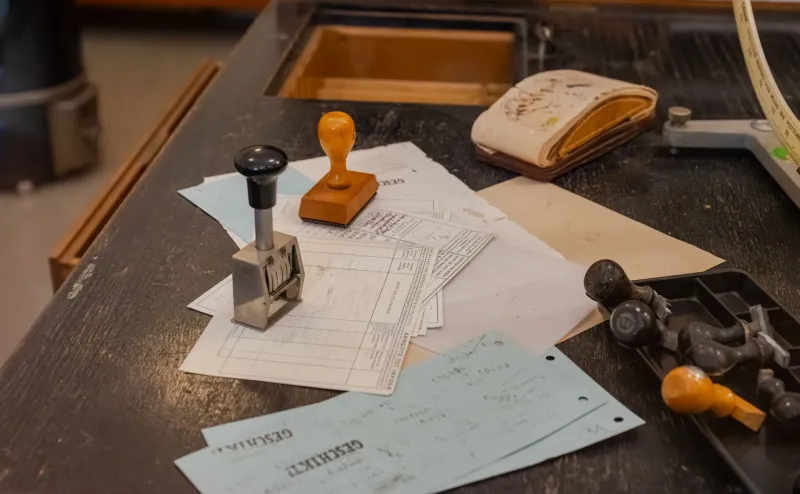
A harried clerk in Arlington County's land records office was processing a stack of property transfers when he made a mistake that would have been hilarious if it weren't so terrifying from a national security perspective. Instead of transferring parcel 47-B to "United States Government," he typed "Eugene Johnson, U.S. Army" — copying the name from a routine personnel form that had somehow gotten mixed in with the property documents.
The transfer went through without a second glance. Why would anyone question the government buying land from itself?
The Discovery
Johnson might have remained the Pentagon's secret owner indefinitely if not for a routine insurance audit. Three days after the erroneous filing, an insurance company reviewing the Pentagon's property coverage noticed something odd in the public records. The building was listed as owned by a private citizen — specifically, a private who earned $50 a month.
The insurance company called the Pentagon's administrative office, figuring it was a simple typo. The call triggered a panicked scramble through filing cabinets as officials tried to figure out how they'd lost ownership of their own building.
"Imagine explaining to President Truman that some kid from Kansas technically owns the Pentagon," one former official later recalled in an interview with a military historian. "We had visions of Johnson selling it to the Soviets for beer money."
The Cover-Up
Once they located Johnson — still peeling potatoes, still completely unaware of his brief stint as a real estate tycoon — officials faced a delicate problem. How do you quietly fix a mistake this big without creating a public relations nightmare?
Their solution was elegantly simple: they buried it. The Army's legal team rushed to Arlington County with the correct paperwork, a hefty "filing fee" that looked suspiciously like hush money, and a very polite request that everyone involved forget this ever happened.
The county clerk, realizing he'd accidentally made a private citizen the owner of America's military headquarters, was happy to cooperate. The erroneous filing was "corrected" and the original documents were quietly misfiled in a way that ensured they'd never surface during routine searches.
The Bigger Picture
Johnson's accidental ownership of the Pentagon wasn't just a funny clerical error — it was a symptom of the massive administrative chaos that followed World War II. The military had grown so fast during the war that its bureaucracy couldn't keep up. Property records, personnel files, and equipment inventories were a mess.
"The whole system was held together with spit and prayer," one former Pentagon administrator admitted decades later. "Eugene Johnson owning the building for three days was embarrassing, but it wasn't even the weirdest thing that happened that year."
The incident led to significant reforms in how the military handled property transfers. New protocols required multiple signatures, cross-referencing, and verification before any property could change hands. The reforms probably prevented dozens of similar mix-ups in the following decades.
What Happened to Private Johnson?
Johnson finished his service without ever learning about his brief career in real estate. He returned to Kansas, worked as a mechanic, raised a family, and died in 1987 — never knowing that for 72 hours, he'd been the legal owner of the world's largest office building.
His son discovered the story in 2003 when a military historian researching post-war administrative snafus tracked down the family. "Dad would have gotten a kick out of that," his son said. "He always said the Army didn't know what the hell it was doing."
The Pentagon, meanwhile, has remained safely in government hands ever since — though somewhere in those filing cabinets, there's probably still a copy of the deed that briefly made a potato-peeling private the landlord of America's military elite.