A Marine Biologist Discovered a New Species. Then He Found Out Someone Beat Him to It — 50 Years Ago
There's a particular kind of embarrassment that only scientists understand. Not the embarrassment of being wrong — that's practically a job requirement. The specific, stomach-dropping embarrassment of being right about something, publishing it, celebrating it, and then discovering that someone else was right about the exact same thing before you were born.
That's what happened to Dr. Elliot Marsh in 2015.
And the truly strange part isn't that he missed a prior classification. It's that the entire scientific community missed it — for fifty years.
The Discovery
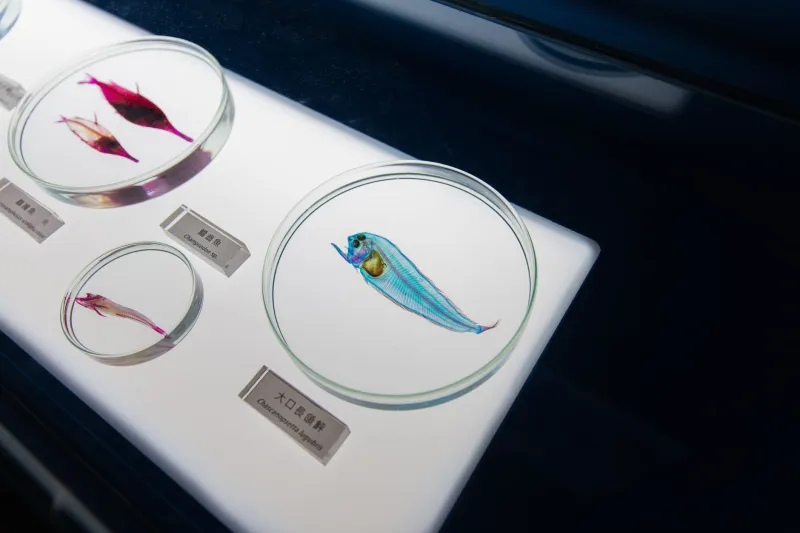
March was a deep-sea fish researcher working out of a marine biology program on the East Coast when his team recovered an unusual specimen during a trawling survey off the Mid-Atlantic Ridge. The fish — small, bioluminescent, with a distinctive jaw structure unlike anything in their reference database — appeared to be genuinely new.
They did what scientists do: they documented it, compared it against known taxonomy, ran the morphological analysis, checked the genetic sequencing against catalogued species, and found nothing that matched. The specimen was unusual enough that they named it, wrote it up formally, and submitted the paper to a peer-reviewed journal.
The paper was published in late 2015. For a few months, it was a modest success — the kind of discovery that doesn't make mainstream headlines but generates real enthusiasm in the relevant research community. A new species. A named, classified, formally described addition to the catalog of life on Earth.
Then a graduate student in Denmark read the paper.
The Letter from Copenhagen
The student — working on an unrelated archival project involving mid-20th century oceanographic records — had recently digitized a batch of papers from a 1965 Danish deep-sea expedition. Among them was a short, almost offhand classification note describing a fish specimen recovered from the Atlantic that matched Marsh's new species in every meaningful detail.
The 1965 researcher had named it. Described its morphology. Assigned it a proper Linnaean classification. Filed the paper in the expedition's official record.
And then, as far as the scientific literature was concerned, it had ceased to exist.
The student sent Marsh an email with a scanned copy of the 1965 document attached. The subject line, by all accounts, was simply: "I think you should see this."
How Does a Species Disappear from Science?
This is the part of the story that's genuinely hard to explain — and genuinely worth understanding.
The 1965 expedition was real, well-funded, and scientifically legitimate. The classification note was properly formatted and filed according to the standards of the era. It wasn't hidden, retracted, or suppressed. It simply fell through the cracks of scientific memory in a way that, once you understand how scientific archives worked in the mid-20th century, is almost inevitable.
Before the digitization of academic literature — a process that is still, in many fields, incomplete — the accessibility of a scientific paper depended almost entirely on whether it got indexed in the right places. A short classification note published as part of an expedition record, in Danish, in 1965, had a very narrow path to visibility. If it wasn't picked up by the major indexing services of the time, if it wasn't cited by subsequent papers, if the original expedition's records weren't held by a widely accessed institution, it could effectively vanish.
Not destroyed. Not wrong. Just invisible.
The species had been sitting in the scientific record the entire time, correctly named and properly described, waiting for someone to look in the right archive.
What Happens Next — and Why It's Complicated
Under the rules of biological nomenclature, the 1965 name takes precedence. That's not a judgment call — it's a formal rule. The first valid published name for a species is the name that sticks, regardless of what came after.
Which meant Marsh's newly named species was, technically, not his to name.
The process of correcting this kind of overlap is called synonymizing — formally acknowledging that two names refer to the same organism and designating which one has priority. It's not uncommon in taxonomy, but it's usually the result of two researchers working simultaneously in the same field, not a fifty-year gap between a forgotten Danish expedition note and a modern peer-reviewed journal.
Marsh handled it with what colleagues described as genuine grace. He co-authored the correction paper with the Danish graduate student who found the original record, formally acknowledging the 1965 classification and restoring the original name. It was, in its own way, a second discovery — not of a new species, but of a lost one.
The Bigger Problem Nobody Likes to Talk About
The Marsh case is unusual in its specifics but not in its underlying problem. Scientific archives are vast, uneven, and increasingly digital — but "increasingly digital" still leaves enormous gaps. Estimates vary, but a significant portion of scientific literature published before 1980 has never been digitized in any searchable form. Expedition records, regional journals, working papers filed with government agencies — these exist in physical archives around the world, largely unindexed and largely unsearched.
Which means, in all likelihood, there are other species sitting in filing cabinets. Other discoveries waiting to be made twice. Other researchers who will submit a paper in good faith and receive, a few months later, a politely worded email from a graduate student in another country.
Science has a long memory. It's just not always a reliable one.
The fish, for its part, is still out there — somewhere in the deep Atlantic, completely unaware that it spent fifty years being forgotten, rediscovered, and forgotten again, and that two researchers on different continents, separated by half a century, both thought it was worth writing home about.