Transplant Patients Keep Waking Up With Strangers Inside Their Heads
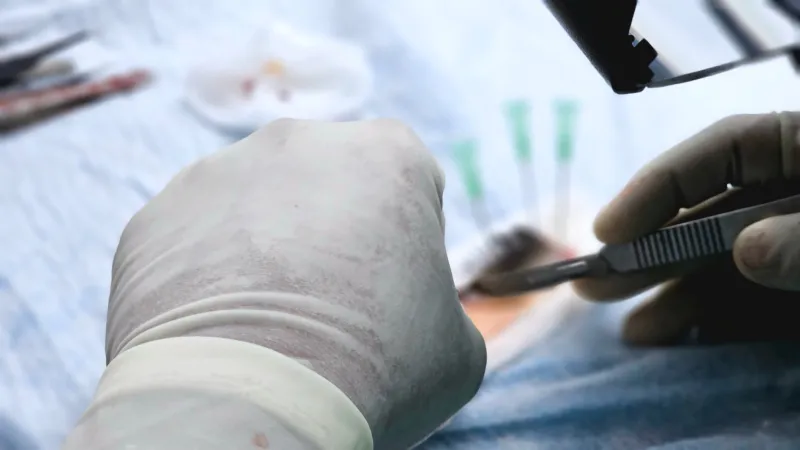
Claire Sylvia was a dancer. After a heart-lung transplant in 1988, she developed a sudden craving for beer and chicken nuggets — neither of which she'd particularly liked before. She started having recurring dreams about a young man named Tim. When she eventually tracked down her donor's family, she learned his name was Tim Leighton, that he was eighteen years old, and that he had died in a motorcycle accident with chicken nuggets in his jacket pocket.
Sylvia wrote a book about it. Researchers studied her case. And the medical community has been quietly, uncomfortably wrestling with stories like hers ever since.
The Phenomenon Nobody Wants to Name Too Loudly
In transplant medicine, the idea that a recipient might absorb something of their donor's personality or memories is referred to — carefully, with plenty of academic hedging — as "cellular memory" or "organ memory." It's not an official diagnosis. It's not in any surgical handbook. But it's not nothing, either.
Researchers Paul Pearsall, Gary Schwartz, and Linda Russek published a study in 2002 examining seventy-three heart and other organ transplant recipients. Of those, they documented cases where patients reported new food preferences, emotional shifts, and even apparent memories that later corresponded to known facts about their donors — facts the recipients had no conventional way of knowing.
The study was peer-reviewed. It was also controversial. It remains controversial. But it's there, sitting in the medical literature, asking a question that nobody has fully answered.
What the Cases Actually Look Like
The stories tend to follow a pattern. A middle-aged man receives a heart transplant and suddenly becomes intensely interested in classical music — his donor, it turns out, was a musician. A woman who never liked spicy food develops an obsession with hot peppers after receiving a kidney from a man whose family described him as a salsa fanatic. A child who receives a heart from a murder victim begins having nightmares detailed enough that, according to one reported case, the descriptions helped investigators identify the killer.
That last case — documented by psychiatrist Dr. Paul Pearsall and frequently cited in discussions of cellular memory — involves a young girl who received the heart of a murdered child. The recipient began describing violent dreams with specific details: the time, the place, the appearance of the attacker. Her psychiatrist brought the information to police. The details were accurate enough to lead to a conviction.
This is the story that tends to stop people cold. It sounds like a thriller plot. It has documented legal and medical records attached to it.
So What's Actually Happening?
Here's where the science gets genuinely complicated, because there are multiple explanations on the table — and none of them are fully satisfying.
The skeptical view holds that these experiences are the product of psychological suggestion combined with the profound emotional weight of receiving a life-saving organ. Transplant patients know, at least in general terms, that someone died so they could live. That awareness, combined with post-surgical medication effects, anesthesia aftereffects, and the sheer trauma of the experience, creates fertile ground for vivid dreams and emotional shifts that the mind then tries to explain through narrative.
The neurological view suggests that the gut — which contains an enormous concentration of neurons sometimes called the "second brain" — may play a role. The enteric nervous system in the digestive tract is capable of operating independently of the brain and storing certain types of functional information. Recipients of intestinal transplants, in particular, have reported personality changes that some researchers connect to this network.
The cellular memory hypothesis — the most controversial — proposes that memory and personality information isn't stored exclusively in the brain but is distributed throughout the body at a cellular level. Under this theory, transplanted organs carry fragments of their donor's experiential history, which can surface in the recipient under the right conditions. This idea sits uncomfortably at the edge of mainstream biology, but its proponents point to the documented cases as evidence that something is happening that conventional neuroscience hasn't fully explained.
Why the Medical Community Stays Quiet
There's an obvious reason why hospitals and transplant surgeons don't lead with this information: it's terrifying. The organ donation system in the United States depends on public trust. If the message became "by the way, you might wake up thinking you're someone else," donation rates could drop overnight.
But the quietness isn't purely strategic. It's also genuinely scientific. The documented cases are real, but they're anecdotal. Controlled studies are nearly impossible to design ethically. And the theoretical framework for how cellular memory could work doesn't fit neatly into any existing model of biology.
So the medical establishment occupies an uncomfortable middle ground: not dismissing the reports, not endorsing the explanation, and quietly funding more research in the hope that eventually the data will say something definitive.
The Part That Stays With You
Here's the thing about Claire Sylvia and Tim Leighton and the chicken nuggets in his pocket: whether the explanation is cellular memory, psychological processing, or something else entirely, the experience was real to her. The craving was real. The dreams were real. The sense of carrying someone else alongside herself was real.
And she wasn't alone. There are hundreds of documented cases, spread across decades, from patients who had no reason to expect what they experienced and no framework for explaining it.
The body keeps secrets. It turns out, some of them might not even be yours.