For Eight Months, a Fully Operational Jet Sat on a Tarmac Belonging to Absolutely Nobody
Losing your luggage is annoying. Losing a commercial aircraft is a different category of problem entirely — and yet, for the better part of a year in the late 20th century, that is more or less what happened between two international carriers who each became convinced, through a cascade of paperwork failures, that the other one owned a perfectly good jet.
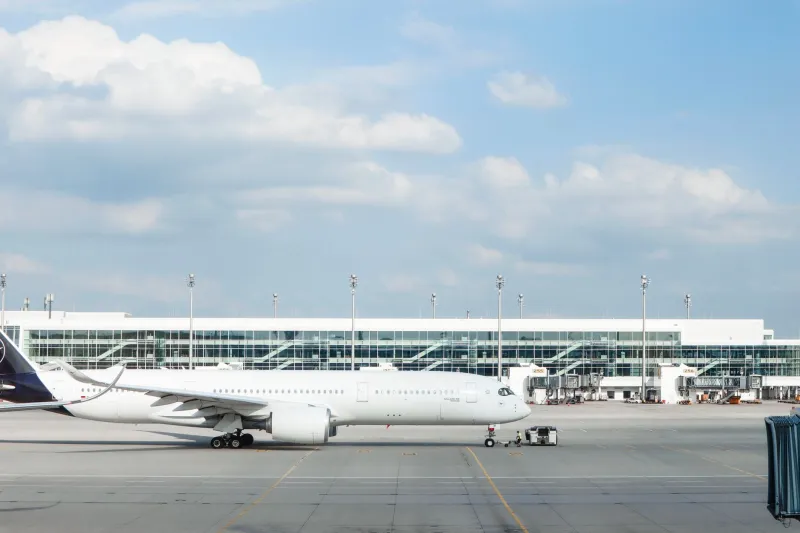
The plane didn't vanish. It didn't crash into the ocean or disappear off a radar screen. It was parked. Visibly, physically parked on an airport tarmac in a country that neither airline was headquartered in, sitting fueled and airworthy while the two carriers spent months pointing at each other across a growing pile of contradictory documentation.
The tab for parking a commercial aircraft, incidentally, is not small. And for a significant stretch of this episode, nobody was paying it.
How You Lose a Plane
The mechanics of how this happened are, in retrospect, almost more embarrassing than the fact that it happened at all.
The aircraft — a mid-sized commercial jet in the workhorse category that airlines of that era used for regional and medium-haul routes — had been sold by one carrier to another as part of a fleet restructuring deal. These kinds of transactions were common in the industry, particularly during the turbulent deregulation era when carriers were constantly reconfiguring their operations. An airline that had too many aircraft of one type would offload them to a carrier that needed them, and a transfer agreement would be drawn up specifying when the plane would be delivered, where it would be delivered, and which party was responsible for it at each stage of the journey.
The problem was the transfer agreement itself. Specifically, it was written in a way that created an ambiguity about responsibility at the exact moment the aircraft crossed from one jurisdiction to another. The selling carrier believed it had handed off responsibility at the point of departure. The buying carrier believed it didn't assume responsibility until the aircraft arrived at a specific receiving airport. Neither belief was unreasonable given the language of the contract. The aircraft's actual position — parked at an intermediate stop in a third country for a routine maintenance check that ran long — fell into the gap between those two positions.
When the maintenance delay stretched from days into weeks, both carriers started asking who was authorizing the continued ground time. When neither got a satisfying answer, both quietly decided the situation was the other party's problem.
The Plane That Belonged to No One
The airport authority at the intermediate stop was, to put it mildly, not thrilled about this development.
They had a large aircraft occupying a parking position, burning through a maintenance slot, and generating fees that were being billed to an account that nobody seemed willing to acknowledge. The aircraft's logbooks showed a recent service history. The fuel records were current. By every technical measure, the plane was in perfectly good shape and ready to fly. It just had nowhere to go and nobody willing to give it instructions.
Airport authorities in this situation have limited options. They can't simply fly an unclaimed aircraft somewhere else. They can't auction it off like an abandoned car — the regulatory and legal frameworks around commercial aviation don't work that way. They can impound it, which generates its own set of complications. Mostly, they can document the situation, keep billing, and wait for the humans responsible to sort themselves out.
For eight months, that's what they did.
The Paper Trail That Wasn't
What made the situation genuinely remarkable — and what transformed it from a contractual dispute into something that interested aviation regulators and industry analysts — was what the episode revealed about record-keeping practices at the time.
The aircraft in question had, in the course of its transfer, been logged out of one carrier's fleet management system and not yet logged into the other's. This meant that for the duration of the dispute, the plane existed in neither carrier's official records as an active asset. It had, from a documentation standpoint, essentially ceased to exist.
This was not supposed to be possible. Aviation regulators maintain registration systems specifically to prevent aircraft from becoming unaccounted for. The plane's registration hadn't lapsed — it was still technically registered to the selling carrier — but the carrier had already written it off their books as transferred. The result was a registration that pointed to an owner who claimed not to own the plane, which pointed to a buyer who claimed not to have received it, which pointed back to a tarmac where the plane sat quietly, running up fees and going nowhere.
When investigators from the relevant aviation authorities eventually got involved — motivated less by the ownership dispute and more by the unsettling fact that a commercial aircraft had gone effectively untracked for months — they found that the record-keeping gap the incident exposed was not unique to this transaction. Fleet transfers of this type routinely passed through documentation windows where an aircraft's status was genuinely ambiguous.
What It Cost, and What It Changed
The dispute was eventually resolved through arbitration, with the buying carrier accepting ownership and the selling carrier absorbing a portion of the accumulated fees as part of the settlement. The exact figures were not made public, but airport parking for a commercial aircraft runs into serious money over eight months, and the legal costs of the arbitration added considerably to the total.
More significantly, the incident prompted a review of transfer documentation requirements in several jurisdictions. The ambiguous handoff language that had created the gap became a textbook example in aviation contract law of exactly the kind of phrasing that needed to be eliminated. New standards required continuous chain-of-custody documentation throughout any inter-carrier transfer, with no gaps permitted regardless of where in the journey an aircraft happened to be sitting.
The plane itself went on to have an uneventful career with its new owner. It flew its routes, carried its passengers, and generated no further paperwork crises.
Somewhere in a filing cabinet, though, there's an eight-month period in its logbook where the listed owner is, essentially, a question mark. Which is a strange thing for a machine that weighs eighty thousand pounds to be.