They Declared It a Historic Shipwreck. Then Divers Found Something Else Entirely.
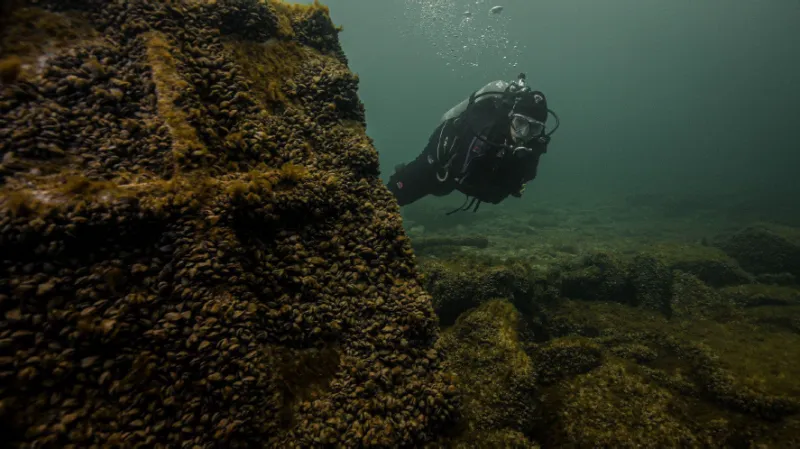
Photo: Nick Zachar, National Oceanic and Atmospheric Administration, Public domain, via Wikimedia Commons
Protecting history usually requires knowing where history is. That's the baseline assumption. You find the thing, you document the thing, you protect the thing. The order matters.
Sometime in the 1970s, that sequence got rearranged on the floor of one of the Great Lakes — and what resulted was an official historic landmark designation built on eyewitness accounts, estimated coordinates, and a considerable amount of institutional wishful thinking. When divers finally went down to confirm what was supposed to be there, the wreckage they found didn't quite match the ship they were looking for.
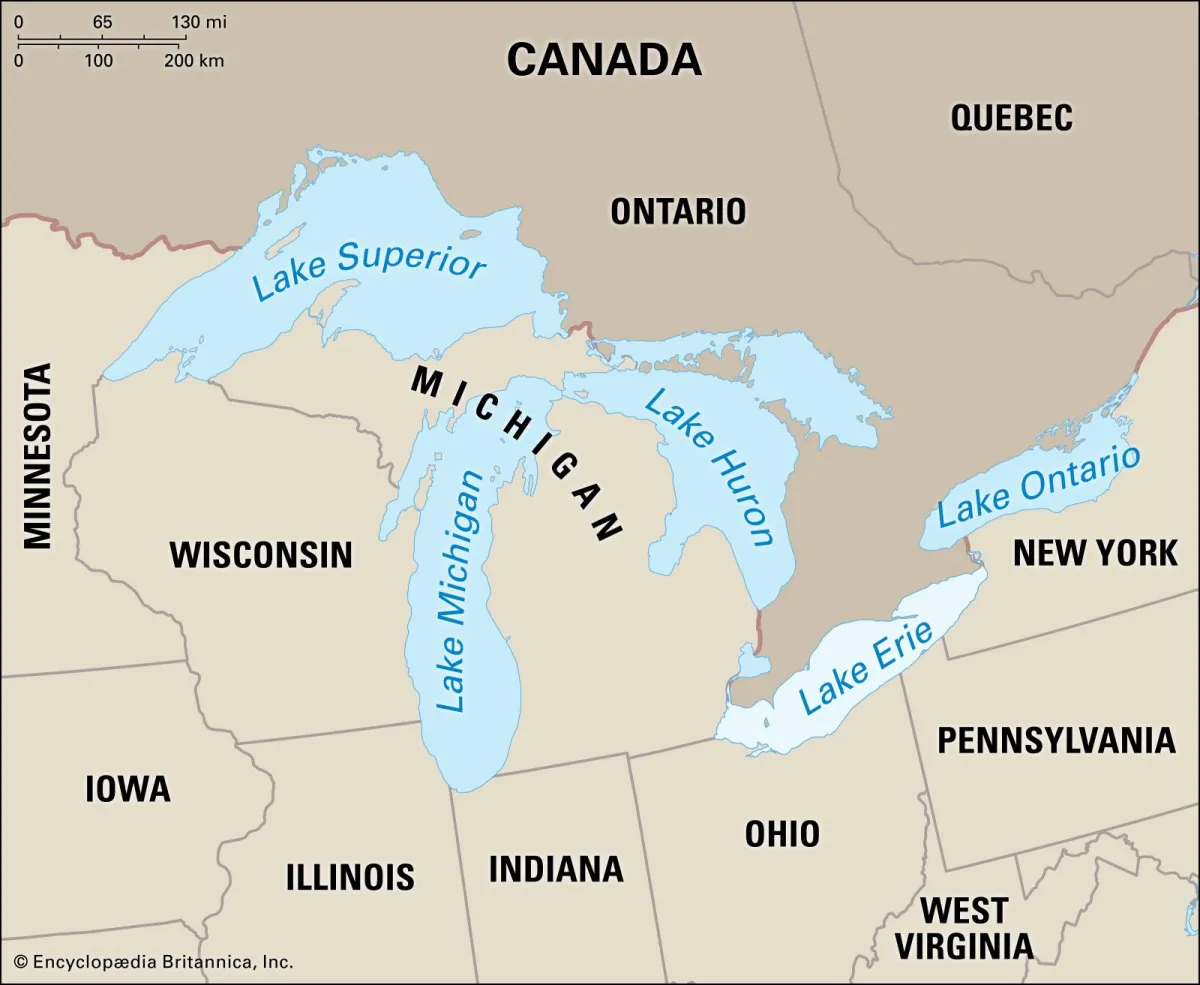 Photo: the Great Lakes, via cdn.britannica.com
The government looked at the findings, looked at the paperwork, and decided the landmark status would stand.
The Storm and the Stories
The Great Lakes have a long and brutal history of swallowing ships. The lakes don't behave like oceans — their storms are shorter, more violent, and harder to outrun. Vessels that would survive open-sea weather have been dragged under by November gales on Superior or Michigan with almost no warning.
 Photo: Lake Michigan, via cdn.britannica.com
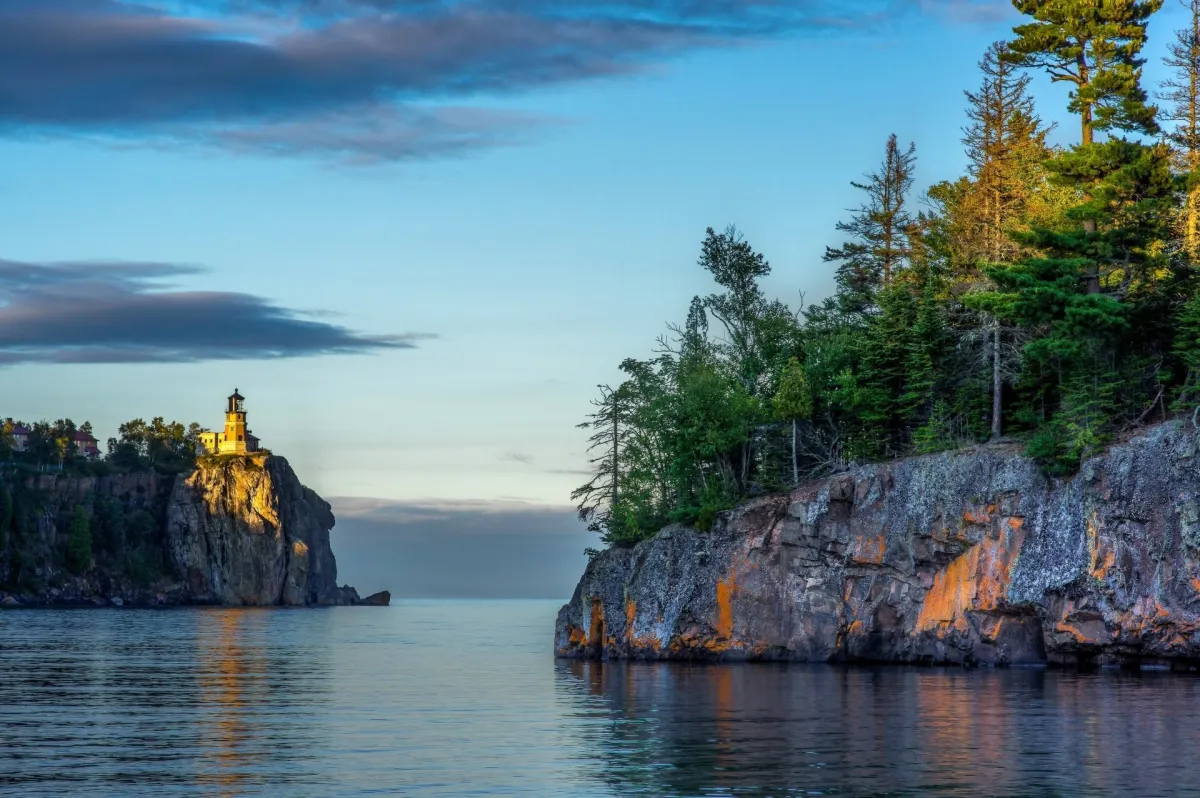 Photo: Lake Superior, via wallpapertag.com
The ship at the center of this story went down during one such storm, the kind that gets remembered in maritime circles for decades. Eyewitnesses on shore and on nearby vessels reported seeing the ship in distress. A few reported seeing it go under. The general location was logged, estimates were made, and the vessel joined the long list of Great Lakes losses that were mourned, documented, and eventually memorialized.
What made this particular wreck unusual was the timing of its official recognition. By the mid-1970s, there was growing interest — both governmental and public — in protecting significant maritime heritage sites from salvagers and recreational divers who might disturb or remove artifacts. Legislation was moving. Lists were being compiled.
The lost vessel, given its historical significance and the drama of its sinking, was a natural candidate. It was added to the protected list.
The problem was the coordinates.
An Estimate Is Not a Location
The position recorded for the wreck was, as anyone familiar with maritime incident reports of that era would understand, an approximation. Witnesses gave their best estimates. Those estimates were averaged, adjusted for known current patterns, and logged as a working location. It was the best information available.
It was not, however, confirmed by any direct observation of the wreck itself. No diver had been down. No sonar sweep had been conducted. The landmark was designated based on the reasonable assumption that the ship was approximately where people thought it probably was.
For a few years, this didn't matter much. The designation was largely symbolic. Enforcement in those depths was minimal. The wreck — whatever was down there — sat undisturbed.
Then a team of divers decided to go look.
What They Found
The dive team, a mix of professional maritime archaeologists and experienced recreational divers, descended to the designated coordinates expecting to find the remains of the documented vessel. They had photographs of the original ship. They had its measurements, its construction details, its distinctive features.
What they found was a wreck. Definitely a wreck. A substantial one, in fact, with significant structural remains scattered across the lake bed.
But the measurements were off. The hull configuration didn't match the documented vessel's design. Certain construction details — the type of fastening used, the arrangement of the cargo hold framing — pointed to a different era of shipbuilding than the target vessel represented.
They had found a ship. They just hadn't found the right ship.
Subsequent research suggested that the wreck at the designated coordinates was likely a different vessel, one that had been lost in the same general area during a different incident, years earlier. The original target ship — if the eyewitness accounts were accurate — was probably somewhere nearby, but the coordinates had been off enough to land the divers on an entirely different piece of maritime history.
The Decision Nobody Talks About
The findings were reported to the relevant authorities. And here is where the story takes its most quietly remarkable turn.
Officials reviewed the dive team's documentation. They acknowledged the discrepancy. They understood that the wreck at the protected coordinates was not the ship the designation had been written for.
And they kept the landmark status in place.
The reasoning, as it was explained through official channels, was essentially pragmatic: the wreck at the coordinates was genuinely historically significant, even if it wasn't the intended vessel. Removing the protection would require reopening a legal and administrative process that would leave the actual site vulnerable in the interim. The original target ship, wherever it actually was, might benefit from the protective buffer created by the designated zone.
There was also, almost certainly, an institutional reluctance to publicly announce that a landmark had been designated for a ship nobody had actually confirmed the location of. That's not a great headline for any agency.
Why It Matters More Than It Should
This story is easy to laugh at — and it is, genuinely, a little funny. The government protecting a ship it hadn't found, then deciding to keep protecting a different ship it hadn't meant to protect. It has a certain circular absurdity that feels almost scripted.
But it also reveals something true about how heritage protection actually works in practice. It is not a precise science. It is a negotiation between limited information, institutional momentum, legal frameworks that weren't designed for underwater archaeology, and the very human desire to protect things before they disappear.
The Great Lakes hold hundreds of wrecks, many of them never formally documented. The ships down there don't care about paperwork. But the paperwork — imperfect, occasionally misaddressed — is sometimes the only thing standing between history and a salvager's crane.
Somewhere on the floor of that lake, two ships rest in the dark. One of them is officially protected. The other one is, technically, still lost.
Both of them are real. That much, at least, nobody is disputing.