The Weather Station That Burned Down and Kept Sending Reports Anyway
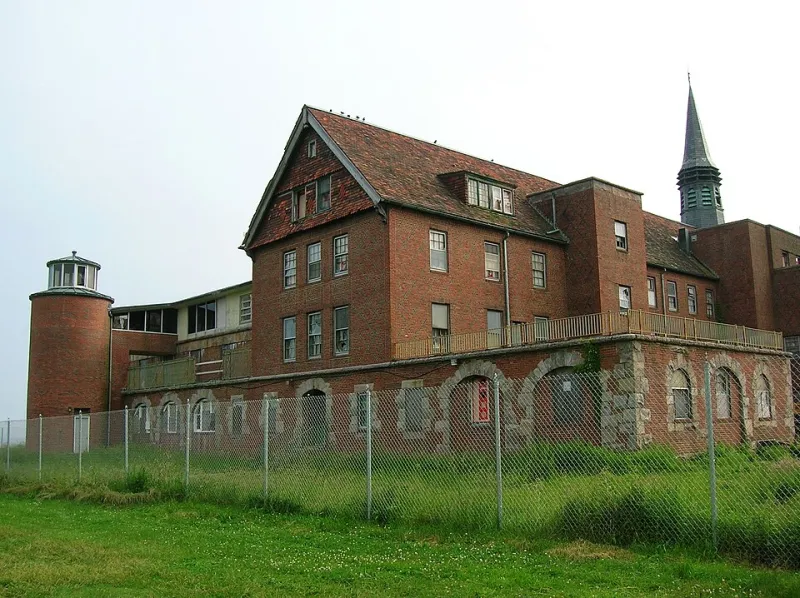
Photo: Marty Aligata, CC BY-SA 4.0, via Wikimedia Commons
At some point in the early history of American meteorology, someone filed a weather report from a building that had been ash and charred timber for three years. Someone else received that report, processed it, and fed the numbers into a system that used them to make real decisions about real ships on real water.
This is not a story about fraud. Nobody was deliberately fabricating data or running a con. This is a story about what happens when a bureaucratic system grows faster than anyone's ability to keep track of it — and how, in the right conditions, an institution can develop a memory so persistent that physical reality simply can't override it.
The Weather Bureau in Its Wild Years
The U.S. Weather Bureau, established formally in 1890 under the Department of Agriculture, was an ambitious project from the start. The goal was to knit together a national network of observation stations — outposts along coastlines, on islands, at lighthouses, in remote inland territories — that would feed a continuous stream of temperature, pressure, wind, and precipitation data into a central processing system.
 Photo: Department of Agriculture, via agr.georgia.gov
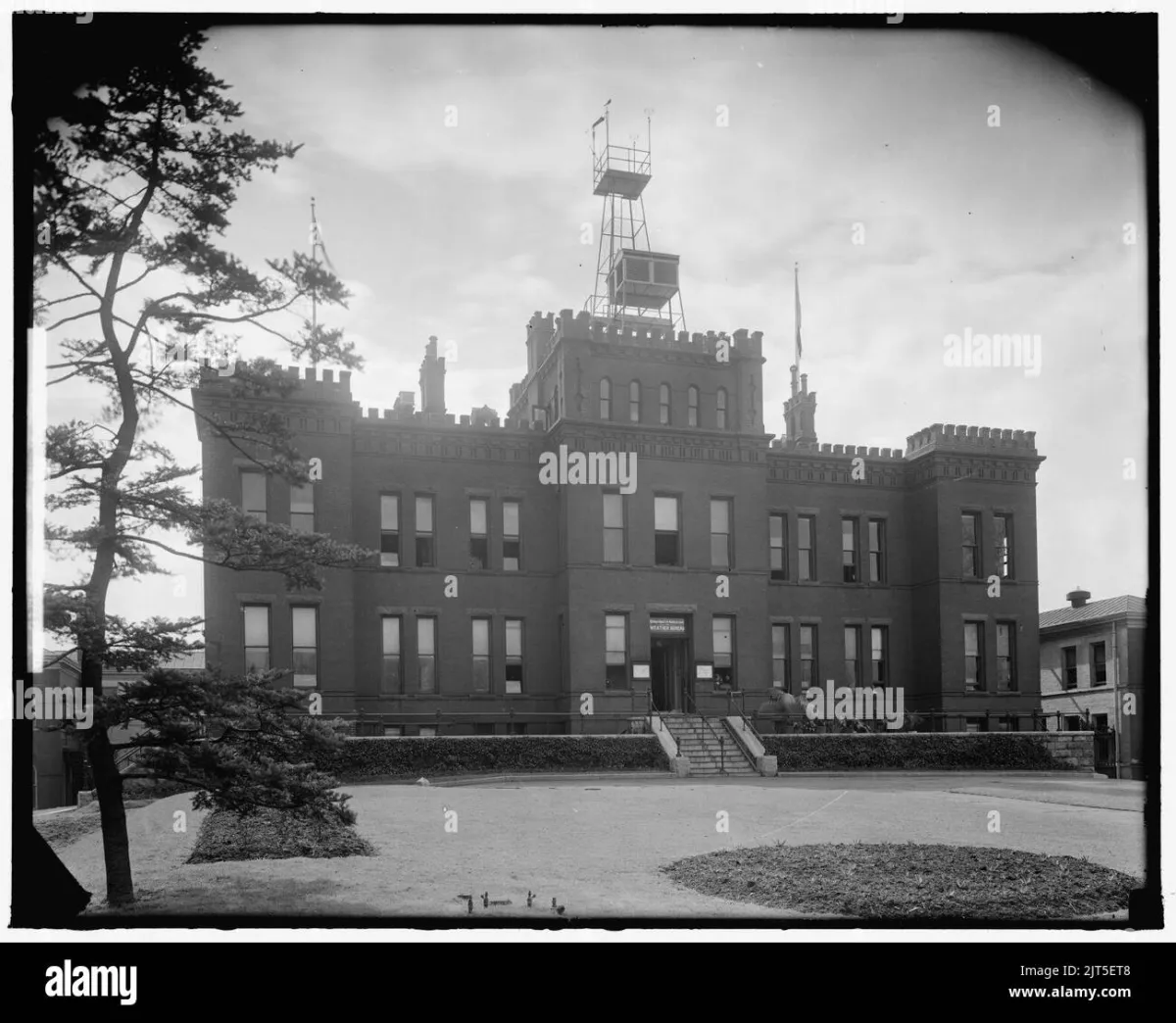 Photo: U.S. Weather Bureau, via c8.alamy.com
The ambition was real. The infrastructure, especially in the first two decades, was considerably less so.
Stations were built quickly, staffed inconsistently, and maintained at the mercy of whatever local conditions and budgets allowed. Communication ran through telegraph lines that went down in storms, through mail that arrived weeks late, and through a clerical apparatus in Washington that was perpetually behind on reconciling what was supposed to exist with what actually did.
In that environment, a station could go quiet for weeks without triggering any formal alarm. Silence was often just weather, or a broken wire, or a keeper who'd been sick. The system had built-in tolerance for gaps. What it wasn't built to handle was a gap that never ended.
When the Building Goes but the Paperwork Stays
The specific mechanics of how a destroyed station could persist on the official rolls came down to a few interlocking failures.
First, the physical destruction had to go unreported through official channels. In remote coastal or island locations, this was genuinely possible. A fire, a flood, a storm that leveled the structure — if the keeper was gone and no formal closure report was filed, the station remained active in Washington's ledgers by default.
Second, the reporting system was largely reactive. Washington didn't send inspectors to verify that stations existed. It received reports, processed them, and flagged anomalies only when numbers looked wrong — not when they were simply absent. A station that went silent didn't necessarily trigger a physical inspection. It might trigger a letter. The letter might go unanswered. The file stayed open.
Third — and this is the part that makes the whole thing genuinely eerie — in at least some documented cases, local observers or nearby station keepers would occasionally fill in numbers for a neighboring station's log, either out of habit, a misunderstanding of their responsibilities, or an honest attempt to keep the record complete. The data that entered the system wasn't always fabricated in bad faith. Sometimes it was just wrong in origin.
Ships Routed by a Ghost
The downstream consequences of phantom station data were not trivial. Weather forecasting in the early 20th century was built on the aggregation of surface observations. Forecasters working from central offices would plot data points across a map, identify pressure systems and fronts, and issue guidance for maritime traffic, agriculture, and public safety.
If one of those data points was coming from a station that didn't exist, the forecast was shaped by a fiction. A pressure reading from a burned-out building on a rocky coastline could influence whether a forecast called for clear sailing or caution along a stretch of water. Ship captains, relying on that forecast, made routing decisions accordingly.
In most cases, the phantom data was probably close enough to neighboring stations' readings that it didn't wildly distort the picture. Meteorology has always had redundancy built in precisely because no single station is perfectly reliable. But "probably fine most of the time" is a troubling standard when the stakes involve vessels at sea.
How the Ghost Finally Got Laid to Rest
The process of identifying and closing phantom stations was slow, unglamorous work. It typically required either a physical inspection — which might be the first visit to a location in years — or a cross-reference audit comparing the official station rolls against maintenance records, personnel files, and correspondence logs.
When auditors or inspectors finally caught up with a defunct station, the paperwork trail they found was often a minor archaeological dig. A station officially destroyed in one year might have received supply orders, personnel correspondence, and administrative updates for years afterward, all dutifully filed and never flagged as anomalous because nobody had formally closed the loop.
The fix, when it came, was administrative rather than dramatic. A closure form was filed. The station was removed from the active rolls. The data pipeline from that location went officially silent — which, in practical terms, it already had been for years.
What the Phantom Station Actually Tells Us
This story is, on the surface, a tale about bureaucratic incompetence in a young federal agency. But there's something more interesting underneath it.
The phantom station persisted not because anyone was careless or corrupt, but because the system had been designed to assume continuity. Once a station existed, the default was that it kept existing. Changing that default required deliberate action — a form, a report, a formal closure — and in the chaos of managing hundreds of remote outposts across a continent, deliberate action sometimes simply didn't happen.
The institution had developed its own momentum, completely decoupled from the physical world it was supposed to be measuring.
The building burned. The data kept flowing. The ships kept sailing on forecasts shaped, in some small part, by weather readings from nowhere.
That's not a ghost story. That's just how systems work when nobody's watching the edges.