She Paid Taxes on an Island She'd Never Seen — for Forty Years
Most people spend their lives trying to own a little piece of land. Barbara Kettner — a retired schoolteacher from coastal New Jersey — accidentally owned an entire island for forty years and had absolutely no use for it.
She didn't buy it. She didn't want it. She didn't even know it existed until a property tax bill showed up with a parcel number she didn't recognize.
That was 1986. By the time anyone official caught on, it was 2024.
How Do You Accidentally Own an Island?
The short answer is: you don't do anything wrong. The county does.
In the early 1980s, a routine resurveying of coastal parcels in the Atlantic County area of New Jersey led to a batch of deed reassignments. The state was in the middle of a broader land classification effort — sorting out which coastal fragments were public land, which were privately held, and which were too small and soggy to matter much to anyone.
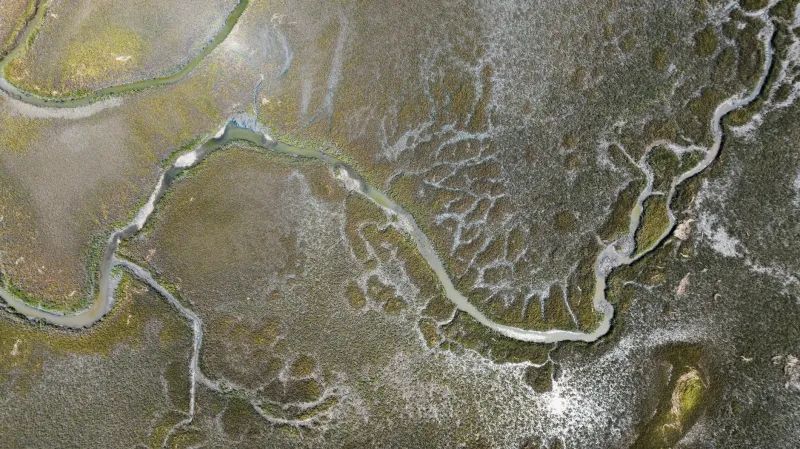
Somewhere in that process, a data entry error assigned a parcel number belonging to a small, uninhabited tidal island — roughly three acres of marsh grass and bird nesting ground — to a residential deed in Kettner's name. Her actual property was a modest single-family home about twelve miles inland. The island was not.
But the paperwork said otherwise. And in the world of county tax rolls, paperwork is everything.
Notices, Bills, and a Very Confused Homeowner
The first few years, Kettner assumed the extra line item on her tax statement was a rounding error or some kind of administrative quirk. The assessed value of the island was low — sometimes a few hundred dollars a year — and she paid it without complaint, the way most people quietly pay small charges they don't fully understand rather than spend an afternoon on hold with a government office.
Then came the jury duty summons. Not for Barbara Kettner, the person. For "the registered owner of Parcel 04-00217-0000-00003." Which was, technically, her.
She called the county clerk's office. They told her it was a clerical issue and would be corrected. It was not corrected.
Over the following decades, Kettner received at least three separate notices related to the island — including one, in the late 1990s, flagging her for potential liability related to erosion encroachment on adjacent public land. She hired a local attorney, who sent a letter to the county explaining the error. The county acknowledged receipt. Nothing changed.
So she kept paying. Not out of any attachment to the island, but because the tax bills kept coming and she'd been told, more than once, that letting property taxes lapse — even on land you don't actually own — could create legal headaches she didn't want.
She never visited. She wasn't even sure which island it was.
The State's Position: That's Our Island
Here's where it gets genuinely strange.
New Jersey's coastal land management office had, for the entirety of this period, been operating under the assumption that the island in question was state-managed public land. It appeared on state coastal maps. It was included in public wildlife habitat surveys. At one point, it was even cited in an environmental report as an example of protected tidal marshland.
Neither office — the county tax authority nor the state land management agency — had any reason to compare notes. Why would they? A three-acre marsh island in the Atlantic isn't exactly a hot-button jurisdictional dispute.
The result was a forty-year parallel reality: the state believed it owned the island, the county believed Barbara Kettner owned the island, and Barbara Kettner believed she was the victim of a bureaucratic error that someone would eventually fix.
They were all, in their own way, correct.
How It Finally Unraveled
In 2023, a coastal development review triggered a title search on a cluster of parcels near the island. A paralegal flagging deed histories noticed the anomaly — a residential property owner listed on a parcel that state records classified as protected coastal land — and escalated it.
What followed was, by all accounts, a fairly uncomfortable series of conversations between county and state officials who had to explain to each other how this had gone unnoticed for the better part of four decades.
Kettner, by this point in her eighties, was contacted by a county attorney who explained the situation with what she later described as "a lot of apologies and not a lot of answers."
The deed error was formally corrected in early 2024. The island reverted to state classification. Kettner was refunded several years of property taxes — though not the full forty years' worth, a point her family has reportedly not let go of entirely.
What This Actually Tells Us
The Kettner case isn't really about one woman or one island. It's about the invisible scaffolding of property law — a system built on the assumption that when a document says something is true, it stays true until someone actively changes it.
County tax rolls don't self-audit. State land registries don't cross-check residential deed databases. Nobody's job, in the ordinary flow of government operations, is to ask whether the person paying taxes on Parcel 04-00217-0000-00003 actually owns it.
For forty years, the answer to that question was: sort of. Technically. On paper.
And in the world of property law, "on paper" counts for a lot.
Barbara Kettner paid her taxes. She answered her notices. She did everything a responsible property owner is supposed to do — for an island she'd never seen, never wanted, and never had any business owning.
Somewhere out in the Atlantic, three acres of marsh grass remain completely indifferent to the whole situation.