Two Inventors, One Idea, Four Decades Apart — And the Patent Office Blessed Both of Them
Imagine spending years of your life developing something original — sketching it out, filing the paperwork, paying the fees, and finally receiving that official government document saying this is yours. Now imagine finding out, decades later, that someone else had already done the exact same thing. And the government had already told them the same thing.
That's not a hypothetical. It's exactly what the U.S. Patent Office allowed to happen — twice, to two different inventors, separated by roughly forty years — and the bureaucratic trail that made it possible is almost more unbelievable than the coincidence itself.
How a Patent Is Supposed to Work
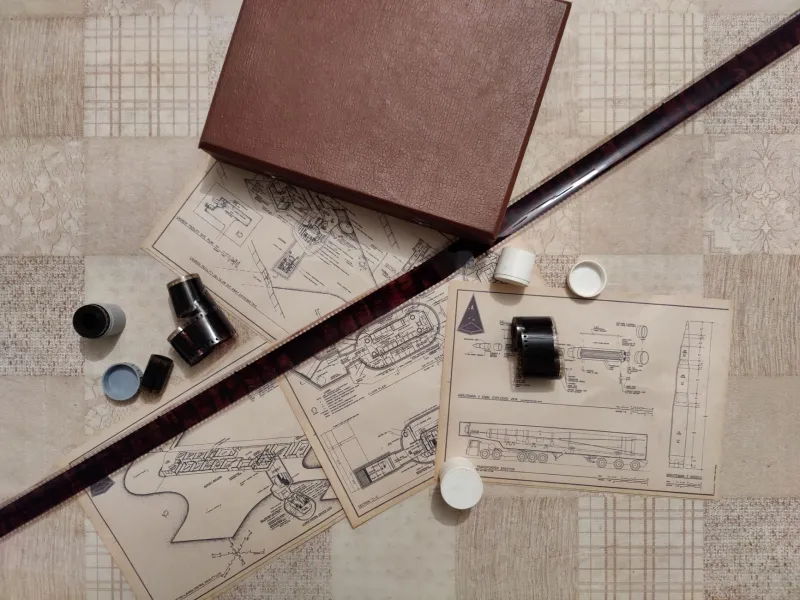
The U.S. patent system exists for one core reason: to make sure that when someone invents something genuinely new, they get legal credit for it. Before a patent is granted, examiners are supposed to conduct what's called a "prior art" search — essentially combing through every existing patent, publication, and documented invention to confirm that nothing like this already exists.
It sounds thorough. It sounds airtight. And for the most part, it is — which is exactly what makes the cases where it fails so jaw-dropping.
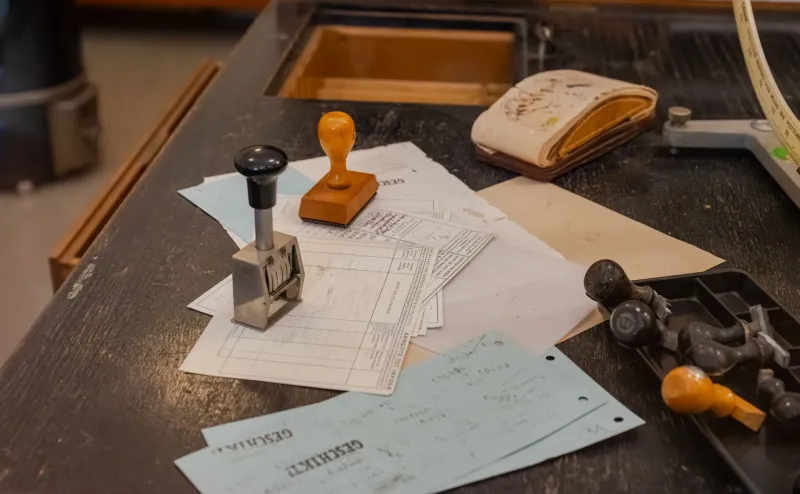
The problem, historically, was that "prior art" searches were only as good as the records being searched. For most of the Patent Office's early history, those records were paper. Mountains of it. Organized by category, yes — but categories that shifted over time, got reclassified, or simply fell into filing purgatory when offices moved, flooded, or burned. (The Patent Office suffered a catastrophic fire in 1836 that destroyed thousands of original records, a fact that would quietly haunt the system for generations.)
The Duplicate That Slipped Through
The specific mechanics of how two patents for near-identical inventions got issued decades apart come down to a few converging failures. First, the original patent — the earlier one — was filed in a period when record-keeping was inconsistent. The invention fell into a technical category that, by the time the second inventor came along, had been reorganized under different terminology. When examiners searched for prior art using the new category language, the old filing simply didn't surface.
Second, the second inventor had done everything right. He'd searched the literature himself. He'd hired a patent attorney. He'd filed in good faith. And when the Patent Office's own examiners ran their search and came up empty, the patent was granted without a red flag in sight.
Both men held legally issued U.S. patents. Both patents described — in different language, with different diagrams, but with functionally identical claims — the same mechanism.
When the Collision Finally Happened
The moment of discovery didn't come from some dramatic courtroom confrontation. It came, as these things often do, from a mundane business transaction. When the holder of the second patent attempted to license his invention to a manufacturer, the company's legal team ran a broader search before signing anything. That search turned up the original patent — old, largely forgotten, but still on the books.
What followed was the kind of legal knot that makes patent attorneys both very busy and very wealthy. Who held the valid claim? The first inventor — or rather, his estate, since decades had passed — held the original grant. But the second inventor held a patent the government had issued in full compliance with its own process. Neither man had done anything wrong. The Patent Office had simply failed to connect the dots.
A System Strained by Its Own History
Legal scholars who've studied duplicate patent cases point to a recurring structural issue: the U.S. Patent Office has always been better at processing new filings than at maintaining a truly searchable archive of old ones. For most of the nineteenth and early twentieth centuries, patents were indexed by broad mechanical categories that didn't translate cleanly across decades of technological evolution.
An invention classified under "pneumatic conveyance mechanisms" in 1880 might not appear in a search for "air-pressure transfer systems" in 1920 — even if they described the same basic thing. The language of technology changes. The filing system, historically, did not keep pace.
Reform efforts came in waves — the introduction of cross-referencing systems, later the shift to digital databases, and eventually the USPTO's modern keyword-searchable archive. But those improvements came after decades of paper-based chaos had already created gaps that no amount of digitization could fully close.
Why It Matters More Than You'd Think
On the surface, a duplicate patent sounds like a quirky footnote. Two guys, one idea, some confused lawyers — fine. But the implications run deeper. Patent rights are property rights. They determine who gets paid when an invention is manufactured, licensed, or sold. A duplicate patent doesn't just create an awkward legal situation; it can freeze an entire industry sector while courts untangle the mess.
And the unsettling truth is that the conditions that allowed it to happen — fragmented records, evolving terminology, institutional blind spots — didn't disappear overnight. They were patched, improved, and gradually modernized. But the archive of pre-digital patents still contains gaps that researchers occasionally stumble into today.
Somewhere in those old filing cabinets, there may be other collisions waiting to be found. Two inventors, one idea, decades apart — and a system that told both of them they were the first.