The GI Who Kept Getting Paychecks From Beyond the Grave

Staff Sergeant Robert Mitchell faced a problem most people never encounter: convincing the world he was alive while simultaneously being legally dead and collecting a government salary for both conditions. For eleven years, Mitchell existed in a bureaucratic twilight zone where three different versions of his life operated independently within the same federal government.
Death by Paperwork
The trouble began in February 1946, during the massive demobilization following World War II. Mitchell, who had served with distinction in the Pacific Theater, was processing out of the Army at Fort Dix, New Jersey. Somewhere between the medical discharge examination and the final paperwork review, a clerk checking off names on a casualty list made a fateful error.
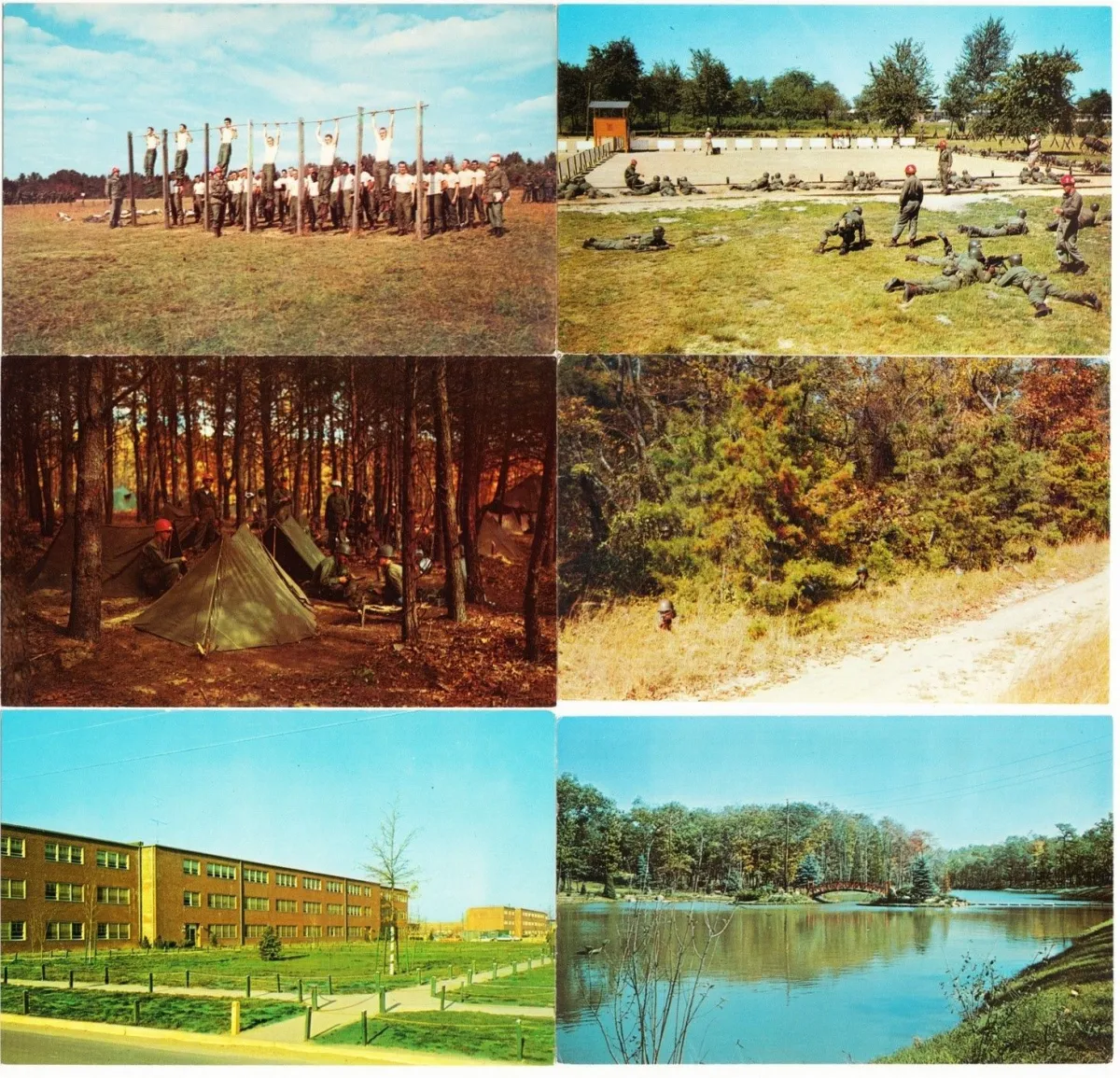 Photo: Fort Dix, via storage.googleapis.com
Instead of marking Mitchell as "discharged," the clerk noted him as "KIA - Pacific Theater, February 1946." The mistake was understandable given the chaos of processing thousands of returning servicemen, but its consequences would prove remarkably durable.
Mitchell walked out of Fort Dix as a civilian, completely unaware that he had just officially died. He returned to his hometown of Springfield, Illinois, got married, found work at a local manufacturing plant, and began what he assumed would be a normal postwar life.
 Photo: Springfield, Illinois, via www.mormonheritage.com
The Checks That Kept Coming
Three months later, Mitchell received something unexpected in his mailbox: an Army paycheck. Not a final settlement or back pay, but a regular active-duty paycheck made out to Staff Sergeant Robert Mitchell, complete with standard deductions for taxes and military benefits.
Assuming it was a clerical error that would resolve itself, Mitchell set the check aside. When another arrived the following month, he called the local Veterans Administration office. The representative assured him the matter would be investigated and resolved quickly.
It wasn't.
Living in Multiple Realities
What Mitchell couldn't have known was that his military records had been split across three different government systems that rarely communicated with each other. The casualty reporting system listed him as deceased. The payroll system maintained him on active duty status. Meanwhile, the Veterans Administration had no record of him at all — neither as a living veteran nor a war casualty.
Each system operated according to its own internal logic. The payroll department continued sending checks because Staff Sergeant Mitchell had never been officially discharged. The casualty office had processed his death notification and sent the standard condolence letter to his family (who ignored it, since Mitchell was obviously alive and living down the street). The VA couldn't provide benefits because they had no documentation of his service record.
The Widow Who Wasn't
The situation became more complex when Mitchell's mother received a visit from Army representatives in 1947. They had come to present her with her son's posthumous Bronze Star and to discuss survivor benefits. Mrs. Mitchell politely informed them that her son was very much alive, working at the Sangamon Tool Company, and had recently become engaged.
The Army representatives were understanding but explained that regardless of her son's apparent health, their records clearly showed he had been killed in action. They suggested she contact the appropriate authorities to resolve what was obviously a case of mistaken identity.
The Investigation That Proved Nothing
Mitchell's attempts to resolve his status led to increasingly surreal encounters with federal bureaucracy. Different offices would examine the same set of facts and reach completely different conclusions about his existence.
The payroll office confirmed that Staff Sergeant Robert Mitchell was on active duty and entitled to his monthly pay. The casualty office confirmed that Staff Sergeant Robert Mitchell had died in February 1946. The personnel office had no record of anyone named Robert Mitchell ever serving in the Army.
Each office maintained detailed, internally consistent documentation supporting their version of reality. None could explain how the other offices had reached different conclusions using the same underlying records.
The Practical Problems of Being Dead
By 1950, Mitchell's unusual status began creating practical complications. He couldn't qualify for a VA home loan because he wasn't officially a veteran. He couldn't receive medical benefits because he was listed as deceased. However, he was required to report for annual physical examinations to maintain his active-duty status — examinations conducted by the same VA system that insisted he didn't exist.
Most bizarrely, Mitchell received notice in 1952 that he was being considered for promotion to Technical Sergeant. The promotion board had noted his exemplary service record and the fact that he had somehow maintained perfect attendance despite being dead for six years.
The Resolution That Wasn't
The situation finally reached a breaking point in 1957 when Mitchell was called for active duty during the Korean War mobilization. The mobilization office had flagged him as an experienced NCO who could be recalled to service. The casualty office objected, noting that dead soldiers typically make poor candidates for deployment.
A joint review board was convened to resolve Mitchell's status once and for all. After examining eleven years of contradictory documentation, they reached a characteristically bureaucratic solution: Mitchell was simultaneously discharged from active duty (ending the paycheck issue), officially declared alive (resolving the casualty status), and granted full veteran benefits retroactive to 1946 (acknowledging his service record).
The Army also quietly implemented new cross-referencing procedures to prevent similar cases in the future.
The Aftermath of Resurrection
Mitchell's case became a legend within Veterans Administration circles, often cited as an example of what could go wrong when bureaucratic systems grew faster than their ability to communicate with each other. The eleven years of paychecks were declared a "good faith error" that Mitchell was allowed to keep, effectively making him one of the few people ever paid by the federal government for being dead.
Mitchell lived until 1983, enjoying a normal postwar life that included a successful career, marriage, and family. He rarely spoke publicly about his years as a living dead man, though he did frame his final Army paycheck and hang it in his garage workshop.
His case highlighted a fundamental challenge of the postwar era: how to manage vast bureaucratic systems that had grown exponentially during the war without losing track of the individual human beings those systems were meant to serve. Sometimes, as Mitchell learned, it was possible to fall through the cracks and end up somewhere that didn't officially exist — even when that somewhere was your own life.