When Paperwork Made a Country Bank the Owner of an Entire State Government
The Filing That Shook a State
On Friday afternoon, March 13, 1936, Harold Whitman thought he was processing the most boring paperwork imaginable. As head clerk at Farmers Trust Bank in Millerville, Iowa (population 847), he was filing a routine agricultural lien on behalf of a local corn farmer who'd defaulted on equipment loans. What Whitman didn't realize was that a single transposed number on the property description would temporarily make his tiny bank the legal owner of the Iowa State Capitol building.
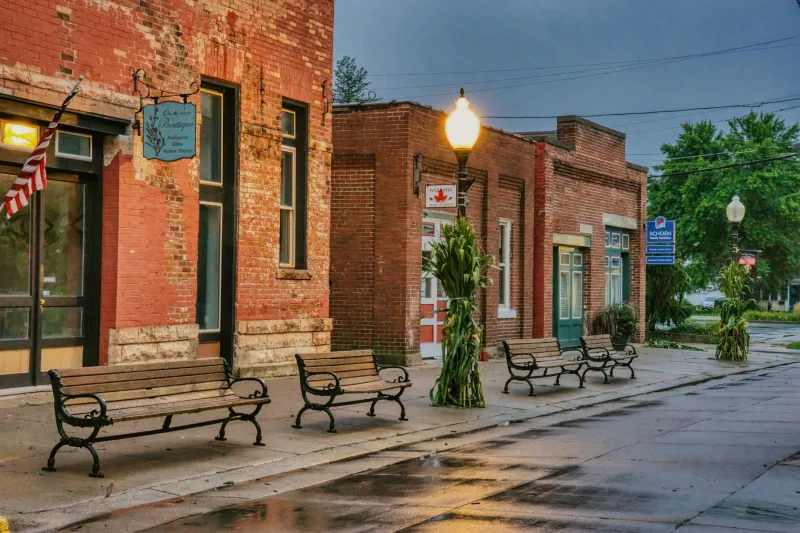
 Photo: Farmers Trust Bank, via lawrencefamily.com
 Photo: Iowa State Capitol, via 3.bp.blogspot.com
The error seemed impossibly small — writing "Parcel 1847-B" instead of "Parcel 1874-B" on the lien documentation. But in the labyrinthine world of property law, that nine-digit difference was the distinction between a foreclosed cornfield and the seat of Iowa's government.
How a Cornfield Became a Capitol
The mix-up traced back to an 1847 surveying mistake that had never been fully corrected in state records. When Iowa's territorial government first plotted Des Moines, a clerical error had assigned the same parcel number to both a rural farm plot and the future site of the state capitol. For nearly ninety years, this duplicate numbering sat dormant in dusty filing cabinets, waiting for exactly the wrong moment to surface.
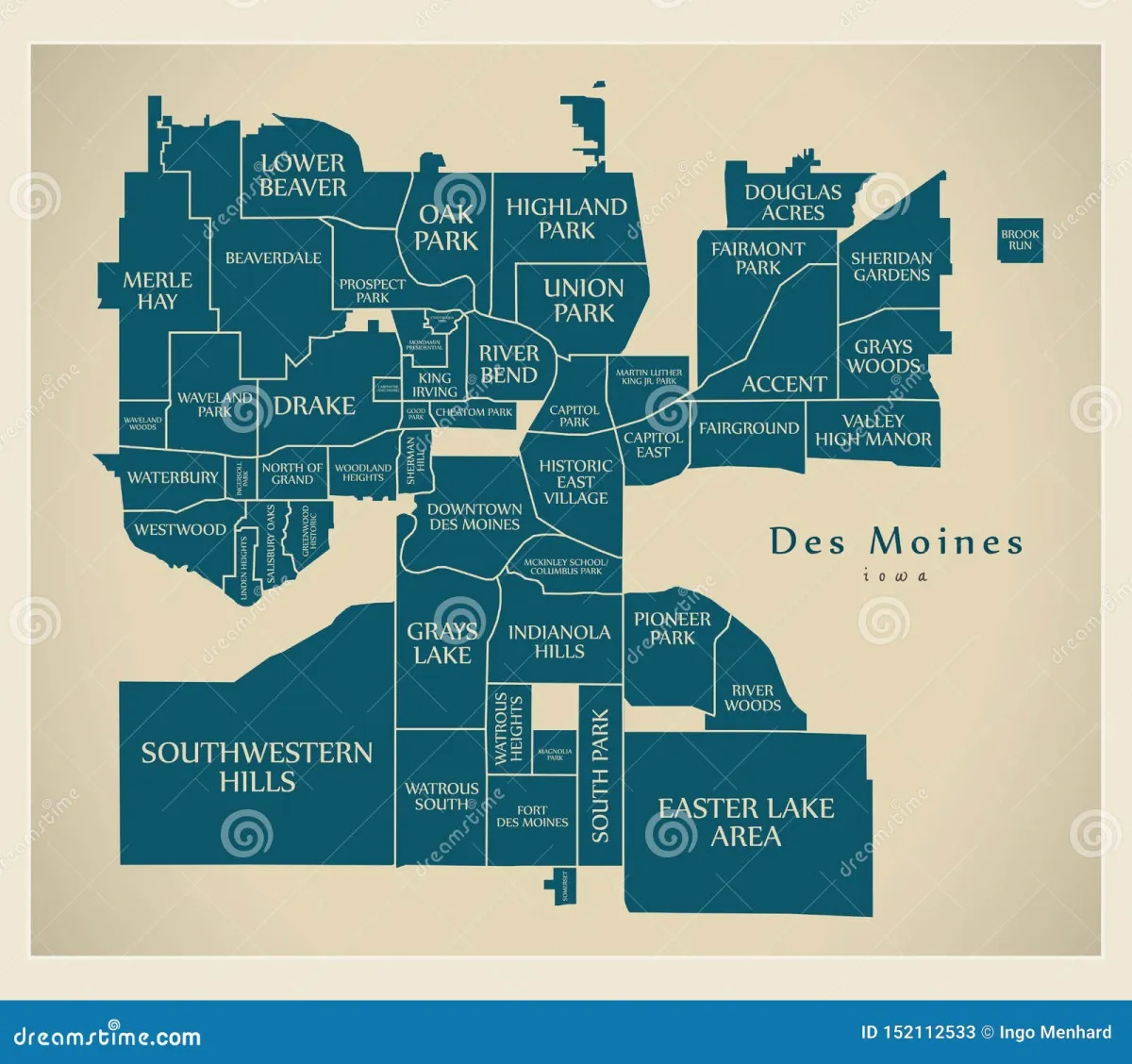 Photo: Des Moines, via thumbs.dreamstime.com
That moment arrived when Whitman's lien filing automatically triggered Iowa's "fast-track foreclosure" process — a Depression-era law designed to help banks quickly reclaim agricultural property. Under this system, any properly filed agricultural lien became legally enforceable within 72 hours, no court hearing required.
By Monday morning, Farmers Trust Bank wasn't just foreclosing on a cornfield. According to the state's own property records, they now held clear legal title to the Iowa State Capitol, the governor's mansion, and roughly twelve acres of downtown Des Moines.
Weekend Warriors in Three-Piece Suits
State Attorney General Robert Morrison first learned about the situation when his secretary handed him a foreclosure notice addressed to "Current Occupant, Iowa State Capitol Building." Morrison initially assumed it was a prank until he called the county clerk's office and discovered that, legally speaking, the state of Iowa was now squatting on bank property.
"We had lawyers working around the clock that weekend," Morrison later recalled in his memoirs. "The governor was asking if we needed to evacuate the building. The bank president was asking if he should start charging us rent."
The legal challenge was unprecedented. Iowa's fast-track foreclosure law contained no provisions for challenging obvious errors — it was designed specifically to prevent lengthy court battles that might delay agricultural foreclosures. State officials found themselves trapped by their own efficiency-minded legislation.
Meanwhile, Harold Whitman was having the weekend of his life. "I kept calling the state attorney's office to apologize," he told the Des Moines Register years later. "But every time I called, they'd put me on hold for twenty minutes while they figured out if I was technically their new landlord."
The Monday Morning Solution
The resolution came through an obscure provision in Iowa's territorial charter that allowed the governor to "reclaim state property through executive order in cases of manifest clerical error." Governor Clyde Herring signed the order at 8:47 AM Monday morning, officially returning the capitol building to state control.
But the legal paperwork took months to fully untangle. For the remainder of 1936, Iowa's property records showed a bizarre ownership chain: the state owned the capitol building, which was simultaneously owned by Farmers Trust Bank, which held a lien on a cornfield that technically didn't exist.
"It was like trying to solve a riddle written by someone who'd never seen a riddle before," complained state surveyor James Mitchell.
The Trophy That Wouldn't Die
Farmers Trust Bank president William Patterson reportedly framed the original foreclosure notice and hung it in the bank's lobby with a brass plaque reading "Weekend When We Owned Iowa." The display became a local tourist attraction, drawing visitors from across the Midwest who wanted to see the paperwork that temporarily conquered a state government.
Patterson kept the framed document until his death in 1962, when his widow donated it to the Iowa Historical Society. It remains on display today in Des Moines, a testament to the moment when bureaucratic precision met bureaucratic absurdity — and absurdity won.
The incident prompted Iowa to completely overhaul its property filing system, adding multiple verification steps and human oversight to prevent similar errors. But legal scholars still study the case as an example of how seemingly foolproof systems can produce utterly foolish results.
As one law professor noted: "For 72 hours in 1936, democracy in Iowa was technically owned by a bank that specialized in farm equipment loans. If that doesn't prove that reality is stranger than fiction, nothing does."