A Software Glitch Oversold 300 Seats. The Airline's Fix Was to Fly a Plane With Nobody On It.
Air travel, from the passenger's perspective, is mostly about waiting. Waiting at the gate. Waiting on the tarmac. Waiting for the drink cart. But underneath all that waiting is a logistics operation of almost incomprehensible complexity — one where the margin between everything working and everything collapsing is, on some days, surprisingly thin.
On one particular Tuesday in the early 2000s, that margin disappeared entirely for a regional US carrier. And the way they handled it involved flying a completely empty airplane as if it were a normal scheduled flight.
The Error That Multiplied
The airline in question — a mid-sized regional carrier operating primarily in the Southeast and Midwest — had recently migrated to a new reservation management platform. The migration, by all accounts, had gone reasonably smoothly. Mostly.
The problem surfaced on a Tuesday morning when the system's seat inventory logic failed to properly account for a time zone conversion affecting flight records that had been imported from the legacy platform. In plain terms: the system thought certain flights had more available seats than they actually did. A lot more.
Because the error wasn't immediately visible on the backend dashboard — it appeared as normal inventory — the booking engine kept selling. Tickets went to individual travelers, to travel agencies, and through corporate booking portals. By the time a gate agent in Atlanta flagged something unusual while preparing for a morning departure, the airline had sold somewhere in the range of 300 seats across multiple flights that collectively had capacity for far fewer passengers.
The number isn't precise because the airline never released an official accounting, but contemporaneous reports from aviation industry publications put the oversell figure well above anything that could be handled through standard bump protocols.
Overselling Is Normal. This Was Not.
It's worth pausing here, because airlines oversell flights all the time. It's a deliberate, legal practice based on the statistical likelihood that a percentage of ticketed passengers won't show up. The math usually works. When it doesn't, airlines offer travel vouchers, upgrade passengers, or ask for volunteers to take a later flight.
That system works because the overages are small — typically a handful of seats on any given flight. What happened to this carrier was categorically different. Multiple flights were affected simultaneously. The oversell numbers on some routes were large enough that standard compensation protocols would have been both logistically unmanageable and financially ruinous if applied at scale.
The airline's operations center spent several hours working through scenarios. Passengers needed to get where they were going. Crew schedules were already locked. Aircraft were already positioned.
The Empty Plane Decision
The solution that emerged — and this is the part that sounds like it couldn't possibly be real — was to reposition an additional aircraft on one of the most heavily affected routes, operating it as an unscheduled service to absorb overflow passengers who had been bumped from their original flights.
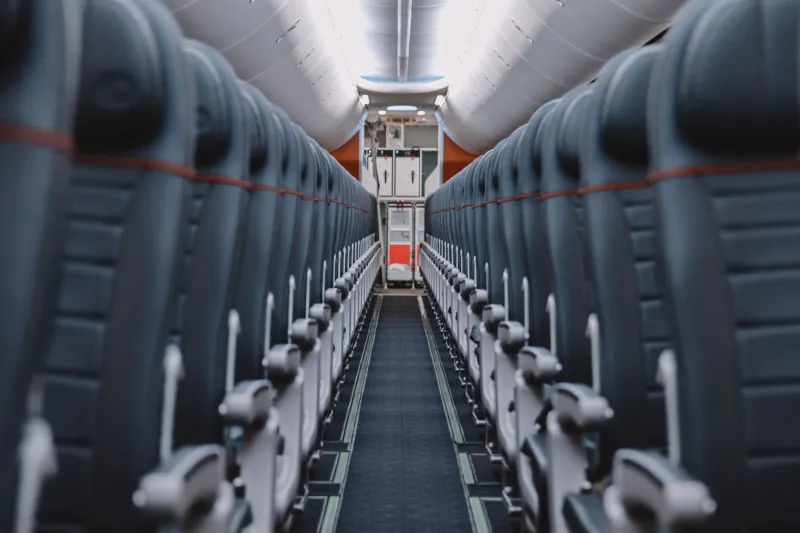
The aircraft was repositioned empty. It flew from a hub to a destination city with no revenue passengers aboard, purely to be in the right place to pick up displaced travelers who had been rerouted from the oversold flights.
From a pure operational standpoint, this isn't entirely without precedent — airlines routinely move aircraft around for positioning purposes. What made this case unusual was the reason: the empty ferry flight was a direct consequence of a software error that had sold more seats than existed across a connected network of routes. The empty plane was, in effect, the physical manifestation of a database mistake.
The fuel cost alone for that repositioning flight ran into the tens of thousands of dollars. Combined with the compensation offered to affected passengers, the total cost of the error ran well into six figures before the day was out.
What the Glitch Revealed
The more interesting part of this story isn't the empty plane — it's what the whole episode exposed about the architecture of modern airline operations.
Reservation systems are extraordinarily complex, and the migration between platforms is one of the highest-risk operations any airline undertakes. The failure in this case wasn't dramatic — it was a quiet error in how time zone data was handled during a data import. But because reservation systems are deeply interconnected with booking engines, gate systems, crew scheduling software, and third-party travel agencies, a single point of failure propagated across the entire network before anyone noticed.
Aviation industry analysts who covered the story at the time pointed to it as an example of what engineers sometimes call a cascade failure — a situation where a small, localized error triggers a chain reaction across interdependent systems, each of which responds to the failure of the previous one in ways that compound the original problem.
The airline patched the system within hours. The fix, reportedly, was a single correction to a time zone conversion table.
One Line of Bad Code
That's the part that sticks. An empty airplane, burned fuel, hundreds of stranded passengers, a six-figure operational loss, and a logistics crisis that took an entire operations center a full business day to untangle — all traceable back to a misconfigured parameter in a database migration script.
Somewhere in a server room, a number was in the wrong format. And an airplane flew with nobody on it.
That's not an exaggeration. That's just how fragile the whole thing is.