The Man Who Served Time for Being the Wrong Person — Then Got Arrested for It Again
Two Men, One Crime, Infinite Confusion
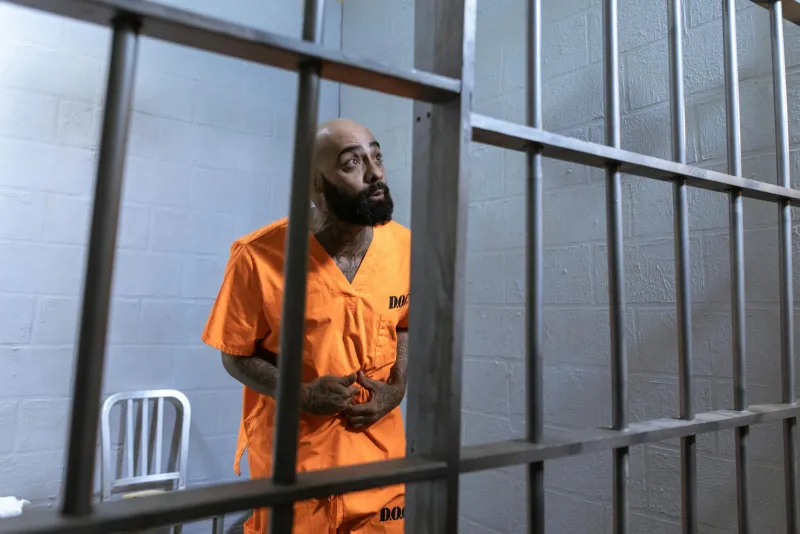
Harold Whitmore walked out of Elmira Correctional Facility on March 15, 1952, believing his nightmare was over. He had served three years for armed robbery, maintained his innocence throughout his sentence, and now looked forward to rebuilding his life. Six weeks later, police knocked on his door again — this time to arrest him for the exact same crime he had already served time for.
 Photo: Elmira Correctional Facility, via c8.alamy.com
What happened next would create a constitutional crisis that reached the Supreme Court and expose the terrifying fragility of America's criminal justice system in the pre-computer age.
 Photo: Supreme Court, via www.thoughtco.com
The Case of the Two Harolds
The trouble began in 1949 with a simple case of mistaken identity that spiraled into a legal catastrophe. When armed robbers hit Brennan's Jewelry Store in Syracuse, New York, witness descriptions led police to Harold Whitmore, a 34-year-old mechanic with a minor criminal record. The problem was, they should have been looking for Harold Whitman — a career criminal whose name differed by just two letters.
Both men were white, both in their thirties, both about the same height and weight. Both had lived in Syracuse at some point. Both had been arrested before. In an era when criminal records were kept on index cards and cross-referenced by hand, the similarities were enough to seal Whitmore's fate.
The evidence against Whitmore was circumstantial but convincing to a 1949 jury. A witness identified him in a lineup, though she later admitted she "wasn't completely sure." His alibi — that he was home sick with flu — couldn't be corroborated because he lived alone. Most damning of all, police found $200 in cash in his apartment, money that Whitmore insisted came from selling his car but couldn't prove.
Three Years of Insisting on Innocence
Whitmore's court-appointed attorney barely mounted a defense, assuming his client was guilty and advising him to plead for leniency. When Whitmore refused to confess or show remorse, the judge sentenced him to the maximum: five to ten years in state prison.
In Elmira, Whitmore became what guards called a "stubborn con" — an inmate who refused to admit guilt even when it hurt his chances for parole. He spent three years writing letters to lawyers, journalists, and civil rights organizations, insisting that Harold Whitman was the real robber. Most of his letters went unanswered.
The Real Criminal Emerges
Meanwhile, Harold Whitman continued his criminal career, blissfully unaware that someone else was serving his sentence. In April 1952, just weeks after Whitmore's release, Whitman was arrested during a botched bank robbery in Albany. When police ran his fingerprints, they discovered something that should have been impossible: the system showed Harold Whitman as currently incarcerated in Elmira for the Syracuse jewelry store robbery.
Detective Lieutenant Frank Morrison, investigating the discrepancy, made a discovery that would haunt him for the rest of his career. The fingerprints from the 1949 Syracuse crime scene — evidence that had somehow never been properly checked against the defendant — matched Harold Whitman, not Harold Whitmore.
The wrong man had spent three years in prison while the real perpetrator walked free.
The Second Arrest
What happened next defied all logic and legal precedent. Instead of quietly acknowledging their mistake, Syracuse prosecutors decided to arrest Harold Whitmore again — this time as an "accessory" to the crime they now knew Harold Whitman had committed alone.
Their reasoning was bizarre but legally creative. Since Whitmore had been "legitimately convicted" based on the evidence available at the time, and since he had already served his sentence, prosecutors argued they could now charge him with "conspiracy to obstruct justice" for maintaining his innocence instead of confessing to help them find the real perpetrator.
On April 28, 1952, barely six weeks after his release, Harold Whitmore found himself back in handcuffs, charged with being an accessory to a crime that everyone now knew he hadn't committed.
When Double Jeopardy Met Bureaucratic Stubbornness
The second arrest created a constitutional nightmare. Whitmore's new lawyer, civil rights attorney Benjamin Margolis, argued that prosecuting a man twice for the same crime — even under different charges — violated the Fifth Amendment's double jeopardy clause.
Prosecutors countered with an argument that seemed to come from an alternate universe. They claimed that since Whitmore had been "rightfully convicted" the first time based on available evidence, his continued claims of innocence after new evidence emerged constituted a separate crime of "willful obstruction of justice."
In essence, they were arguing that Whitmore should have confessed to a crime he didn't commit in order to help them solve a case they had already botched.
The Supreme Court Steps In
The case of Whitmore v. New York reached the Supreme Court in 1953, creating precedent that still protects defendants today. Justice William O. Douglas, writing for the majority, delivered a scathing rebuke to the prosecutors:
"The state cannot punish a man for maintaining his innocence, even when that innocence is inconvenient to the state's case. To hold otherwise would create a system where citizens are penalized not for their crimes, but for the state's mistakes in prosecuting those crimes."
The Court ruled unanimously that the second prosecution violated double jeopardy protections and ordered Whitmore's immediate release. More importantly, they established the principle that prosecutorial errors cannot be corrected by prosecuting the victim of those errors.
The Aftermath of Administrative Chaos
Harold Whitmore was finally, truly free in December 1953 — nearly five years after his ordeal began. He received no compensation for his wrongful imprisonment, no apology from the state, and no help rebuilding the life that had been destroyed by a filing system that couldn't tell two similar names apart.
Harold Whitman, the actual perpetrator, served eight years for the bank robbery and several other crimes. He never served a day for the Syracuse jewelry store robbery that had cost an innocent man three years of his life.
The case led to reforms in how criminal records were maintained and cross-referenced, though it would be decades before computerized systems eliminated most name-based mix-ups. More importantly, it established legal protections that prevent prosecutors from charging defendants with new crimes simply because earlier prosecutions were based on mistakes.
The Price of Being Wrong
Perhaps the most chilling aspect of the Whitmore case wasn't the original mistake — mistaken identity was a genuine risk in an era of manual record-keeping. It was the system's response when the mistake was discovered. Rather than acknowledge error and provide compensation, the machinery of justice tried to grind forward, seeking to punish Whitmore for the inconvenience his innocence had caused.
Harold Whitmore's story remains a stark reminder that in the intersection of human fallibility and institutional power, being the wrong person at the wrong time can become a crime in itself — and proving your innocence can somehow make you guilty of something else entirely.