The GI Who Attended His Own Funeral — Then Showed Up for Roll Call
The Death That Wasn't
Private Tommy Mitchell from Cookeville, Tennessee, died on February 14, 1944, during a chaotic firefight on Kwajalein Atoll. His commanding officer filed the death report, the Army notified his family, and his hometown held a military funeral complete with honor guard and a folded flag for his mother. There was just one problem: Tommy Mitchell was very much alive, recovering from a minor shrapnel wound in a field hospital two islands away.
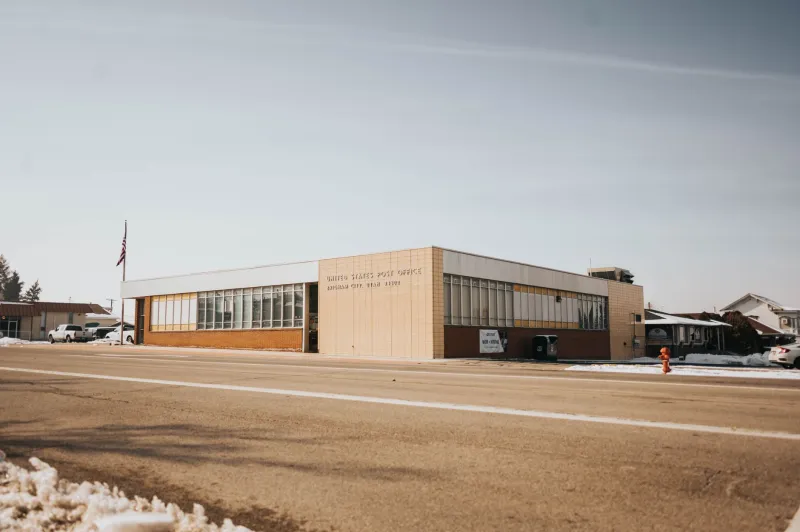
 Photo: Cookeville, Tennessee, via linktr.ee
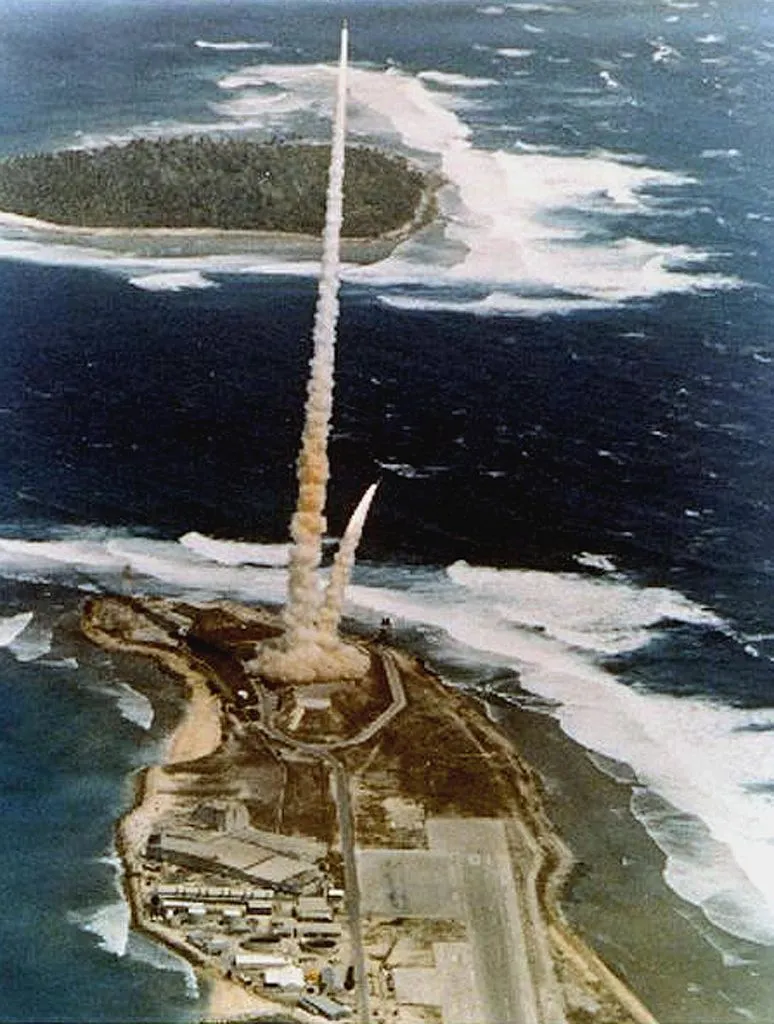 Photo: Kwajalein Atoll, via www.warhistoryonline.com
What followed was perhaps the most surreal case of mistaken identity in military history — a bureaucratic comedy of errors that left one soldier simultaneously dead and alive in Army records for nearly three months.
When the Fog of War Meets the Fog of Paperwork
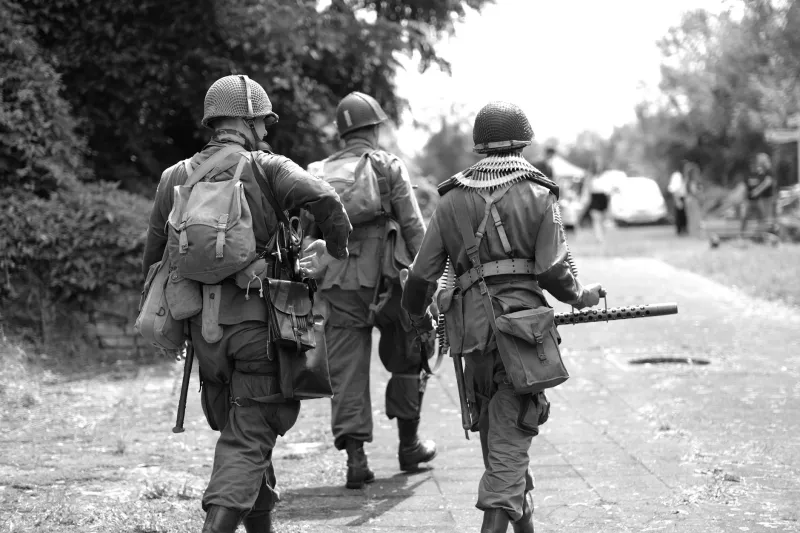
The mix-up began during the brutal battle for Kwajalein, when Mitchell's unit came under heavy mortar fire. In the confusion, Sergeant Jake Morrison saw what he believed was Mitchell taking a direct hit from shrapnel. In the chaos of combat, with limited visibility and soldiers scattered across the battlefield, Morrison reported Private Mitchell as "KIA — direct mortar strike."
What Morrison actually witnessed was Mitchell being knocked unconscious by the blast concussion and dragged to safety by a Navy corpsman. But in the heat of battle, with communications systems down and units separated, there was no immediate way to correct the record.
Mitchell woke up three days later in a field hospital on Majuro Atoll, with a bandaged head wound and no memory of how he'd gotten there. The medical staff, dealing with hundreds of casualties and operating with incomplete patient records, simply treated him as "John Doe — head trauma" until he could provide his name and unit information.
 Photo: Majuro Atoll, via cdn.britannica.com
Meanwhile, Back in Tennessee
While Mitchell was asking Navy doctors when he could rejoin his unit, his family in Cookeville was planning his funeral. The War Department's casualty notification system worked with devastating efficiency: within a week of Morrison's report, Tommy's mother had received the dreaded telegram informing her of her son's death "in service to his country."
The Cookeville American Legion immediately began organizing a memorial service. Local newspapers ran obituaries praising the young soldier's sacrifice. The high school where Tommy had played basketball retired his jersey number. By the time the military funeral took place on March 8, 1944, the entire town had turned out to honor their fallen hero.
"It was one of the most moving services I'd ever conducted," recalled Reverend Samuel Hayes, who delivered the eulogy. "Tommy's mother clutched that flag like it was the last piece of her son on earth. The whole congregation was in tears."
The Awkward Resurrection
Mitchell's resurrection began with a routine mail call at the Majuro field hospital. When he finally received his accumulated letters — including a heartbreaking condolence card from his own mother — he realized something had gone catastrophically wrong.
"I'm reading this letter from my mom talking about how proud she was of my sacrifice and how the whole town came to my funeral," Mitchell later told Stars and Stripes. "I had to read it three times before I understood that I was supposed to be dead."
His first instinct was to send a telegram home immediately. But the field hospital's communications officer, faced with a message that essentially read "I'm not actually dead," insisted on verifying Mitchell's identity through official channels first. This launched a paperwork investigation that would take weeks to resolve.
The Return of the Living
Mitchell's commanding officer, Lieutenant Colonel Robert Hayes, was reviewing casualty reports when he received word that one of his "dead" soldiers was requesting permission to return to active duty. Hayes initially assumed it was either a clerical error or an elaborate practical joke.
"I walked into that field hospital expecting to find some confused replacement soldier," Hayes remembered. "Instead, there's Tommy Mitchell, very much alive, asking when he could get back to his unit. It was like seeing a ghost, except the ghost was asking about mail call."
The reunion created an immediate crisis for military bureaucracy. Mitchell was simultaneously listed as "Killed in Action" and "Present for Duty" in Army records. His family had already received his death benefits. His personal effects had been shipped home. His replacement had already been assigned to his unit.
Most awkwardly, Mitchell had been posthumously awarded the Bronze Star for valor, which had already been presented to his mother at the funeral ceremony.
Untangling the Impossible
Resolving Mitchell's legal status required coordination between multiple military departments, the War Department, and even the Treasury Department, which had already processed his death benefits. The Army's solution was typically bureaucratic: they officially "revived" Mitchell in the records while simultaneously creating a new file classification — "Erroneously Reported Deceased" — to prevent similar situations in the future.
Mitchell's mother learned her son was alive through a phone call from the Red Cross, three weeks after his funeral. "I thought it was some kind of cruel joke at first," she told the Cookeville Herald. "Then Tommy called me himself, and I just started crying and couldn't stop."
The Bronze Star presented a unique challenge. Since Mitchell was technically alive when he performed the actions that earned the medal, the Army decided he could keep it — making him possibly the only soldier in history to receive a posthumous decoration while still breathing.
The Paperwork That Never Dies
Mitchell served out the remainder of the war without incident, but his military records remained permanently confused. Veterans Administration files showed him as both deceased and living, creating decades of complications when he applied for benefits.
"Every time I tried to get medical care or apply for a VA loan, some clerk would look at my file and tell me I was dead," Mitchell said in a 1984 interview. "I'd have to bring documentation proving I was alive. It got to be routine."
Mitchell kept his Bronze Star and his sense of humor about the whole affair. At American Legion meetings in Cookeville, he would introduce himself as "the only man here who attended his own funeral and lived to complain about the eulogy."
The incident prompted the Army to completely revise its casualty reporting procedures, adding multiple verification requirements before death notifications could be sent. But for Tommy Mitchell, the lesson was simpler: "Sometimes being dead is a lot more complicated than being alive."