The Lighthouse That Wouldn't Die: How a Forgotten Beacon Kept Ships Safe for a Decade After It Was Officially Erased
The Light That Bureaucracy Forgot
In the summer of 1987, Coast Guard Lieutenant Commander Janet Hayes was reviewing navigation charts for Lake Superior when she noticed something that shouldn't have existed. Ships were reporting a lighthouse signal from Granite Point — a beacon that had been officially decommissioned, dismantled, and removed from all federal navigation charts nine years earlier.
 Photo: Janet Hayes, via images.squarespace-cdn.com
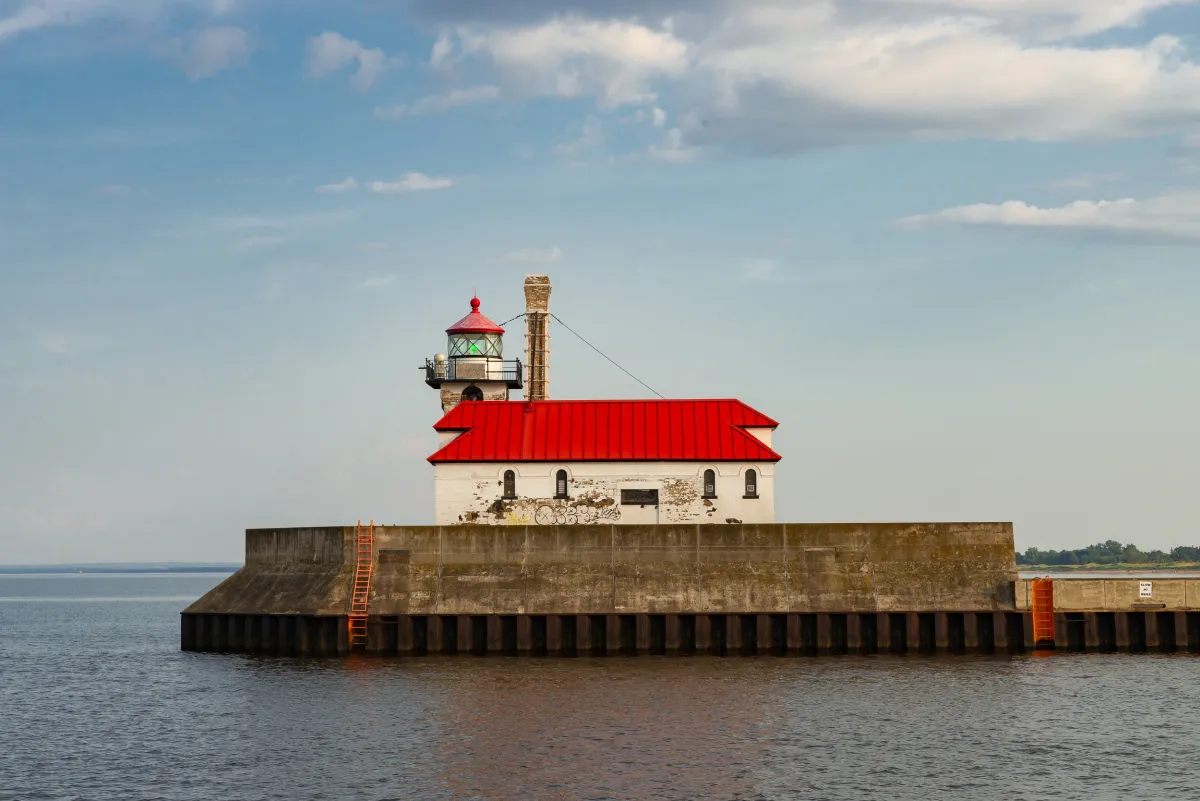 Photo: Lake Superior, via static.wixstatic.com
According to every official record, there was no lighthouse at Granite Point. According to every ship captain navigating those waters, there absolutely was.
What Hayes had discovered was one of the most bizarre infrastructure mysteries in maritime history: a lighthouse that had been abandoned by its own government but refused to abandon its duty.
When Progress Left a Light Behind
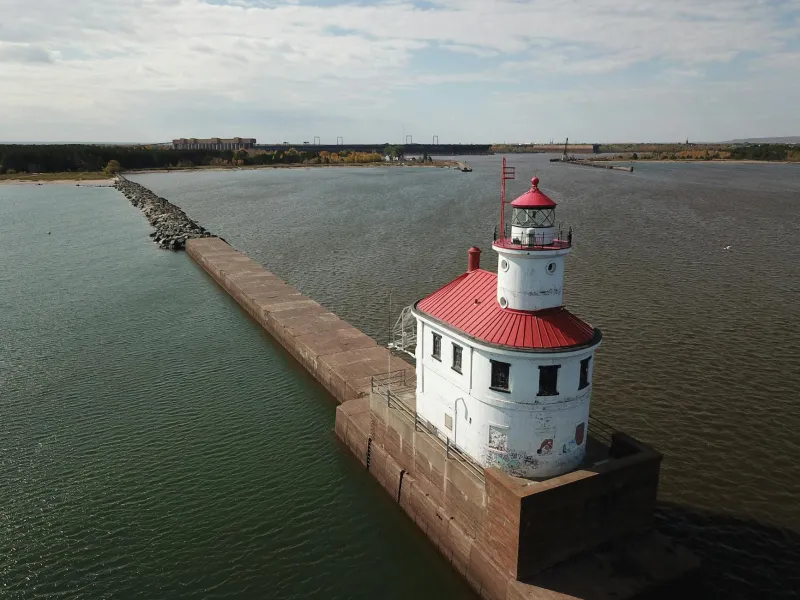
The Granite Point Light Station had served ships on Lake Superior since 1892, warning vessels away from a notorious reef that had claimed dozens of ships over the decades. By the 1970s, advances in radar and GPS technology had made many traditional lighthouses obsolete. In 1978, the Coast Guard officially decommissioned Granite Point, planning to replace it with a modern automated radio beacon.
The decommissioning process seemed straightforward. Coast Guard crews removed the massive Fresnel lens, disconnected the main power systems, and filed paperwork declaring the station "abandoned and inoperative." The lighthouse disappeared from official navigation charts, and the Coast Guard redirected shipping traffic to use electronic navigation systems instead.
But in the maze of cables, backup systems, and redundant power sources that kept the lighthouse running, one crucial connection was overlooked.
The Circuit That Wouldn't Quit
Unbeknownst to the decommissioning crew, Granite Point Light had a backup system installed during a 1965 modernization project. This secondary circuit, designed to keep emergency signals running during power outages, was connected to a separate electrical feed that ran directly from a small hydroelectric generator powered by a nearby stream.
When the main lighthouse systems were shut down, this backup circuit automatically activated, just as it was designed to do. A simple rotating beacon — much dimmer than the original light but still visible for miles — began operating on a timer system that had been programmed to run indefinitely.
The emergency light was never meant to serve as a primary navigation aid. It was supposed to provide basic illumination for maintenance crews working on the main system. But with no maintenance crews coming to Granite Point anymore, the little backup light just kept doing its job, night after night, year after year.
Ships in the Night
For nearly a decade, this created one of the strangest situations in maritime navigation. Ships using current Coast Guard charts were warned to stay away from Granite Point, where "no navigation aids" were supposed to exist. Ships using older charts, or captains relying on local knowledge, continued to trust the light they could clearly see flashing every night.
Captain Robert "Mac" McKenzie, who ran freight routes across Lake Superior throughout the 1980s, remembers the confusion: "You'd have your official chart saying there's nothing there, but you'd look out the window and see a light plain as day. Some of the younger crews thought they were seeing things. Old-timers like me just figured the government paperwork was screwed up again."
The situation became even more surreal when the Coast Guard began receiving reports of an "unauthorized navigation beacon" operating at Granite Point. Multiple investigations were launched to find who was illegally operating lighthouse equipment on federal property.
The Search for a Ghost Operator
For three years, Coast Guard investigators tried to identify who was running an illegal lighthouse at Granite Point. They suspected everything from smugglers using the light to guide boats to shore, to local maritime enthusiasts who had taken it upon themselves to maintain the historic beacon.
Investigation teams made multiple trips to the remote location, each time finding the lighthouse building empty and secured, with no signs of recent human activity. The light continued to operate with mechanical precision, but nobody could figure out how or why.
The mystery deepened when investigators discovered that the light was running on a power source that didn't appear on any official electrical grid maps. The original lighthouse had been disconnected from commercial power in 1978, yet something was clearly providing electricity to keep the beacon running.
The Bureaucratic Maze
The breakthrough came in 1985 when a Coast Guard electrical engineer, investigating reports of the "phantom lighthouse," traced the power source to the forgotten backup system. But discovering how the light was operating didn't solve the problem of how to shut it down.
The backup system had been installed by a different Coast Guard department, under a different administrative structure, with maintenance responsibilities assigned to an office that had been reorganized out of existence in 1979. No current Coast Guard department had the official authority to modify or disconnect the system.
Meanwhile, the lighthouse had been transferred to the National Park Service as part of a "historic preservation initiative" — but the Park Service had only accepted responsibility for the building and grounds, not for any "non-existent electrical systems."
The result was a bureaucratic standoff. The Coast Guard couldn't shut down equipment they officially didn't own. The Park Service couldn't maintain systems they officially didn't control. And the lighthouse just kept flashing.
When Paperwork Meets Reality
The situation reached absurd heights in 1986 when the Coast Guard issued an official "Notice to Mariners" warning ships not to rely on navigation aids at Granite Point because "no authorized lighthouse equipment is currently operational at this location" — while simultaneously issuing internal memos to their own vessels to "exercise caution near Granite Point due to reports of unauthorized light signals."
Ship captains found themselves in the bizarre position of being officially warned away from a light that was simultaneously helping them navigate safely through dangerous waters.
The phantom lighthouse became something of a legend among Great Lakes mariners. Some captains made detours just to see the light that wasn't supposed to exist. Others began referring to it as "the lighthouse that bureaucracy couldn't kill."
The End of an Era
The Granite Point mystery was finally resolved in 1987 when Lieutenant Commander Hayes's investigation led to a comprehensive review of all decommissioned lighthouse sites. A special task force was created with authority to "resolve administrative discrepancies in lighthouse decommissioning procedures."
On August 15, 1987, a joint Coast Guard-Park Service team finally disconnected the backup power system that had kept Granite Point Light operating for nine years after its official death. The little stream-powered generator was disconnected, the backup circuit was disabled, and the last ghost lighthouse on Lake Superior finally went dark.
The Legacy of the Lighthouse That Wouldn't Quit
The Granite Point incident led to comprehensive reforms in how federal agencies handle infrastructure decommissioning. New protocols require multiple inspections, complete electrical surveys, and inter-agency coordination before any navigation aid can be officially declared "inoperative."
But perhaps the most important lesson of Granite Point Light isn't about bureaucratic efficiency — it's about the unexpected resilience of systems designed to save lives. For nine years, a forgotten backup circuit and a small stream-powered generator continued doing what they were designed to do: keep ships safe in dangerous waters.
In an age of GPS satellites and computer navigation, there was something oddly comforting about a lighthouse that refused to give up its duty, even when its own government had forgotten it existed. Sometimes the most reliable systems are the ones that keep working long after everyone stops paying attention to them.