The Horse Insurance That Paid for Everything Except the Horse
When Legal Logic Goes Swimming
In the summer of 1883, New Orleans merchant Jean-Baptiste Trosclair thought he was making a routine business decision. He purchased a comprehensive livestock insurance policy for his prize Percheron stallion, Napoleon, who was being transported upriver to Baton Rouge aboard the steamboat Belle Creole. The policy was straightforward: $500 coverage for "death, injury, or total loss of the insured animal during transport."
What Trosclair couldn't have anticipated was that his horse would become the star of one of the most bizarre insurance cases in American legal history — a case where the horse survived, but the policy paid out anyway.
The Sinking That Changed Everything
The Belle Creole never made it to Baton Rouge. On July 23, 1883, the aging steamboat struck a submerged log near Plaquemine and began taking on water rapidly. Captain Moses Guidry ordered all passengers and crew to abandon ship, but in the chaos of evacuation, nobody thought to secure the cargo hold.
Napoleon, being a valuable horse, was kept in a specially constructed stall on the main deck rather than in the hold with the general freight. When the ship listed heavily to starboard, the horse's stall broke free from its moorings and slid into the Mississippi River — with Napoleon still inside.
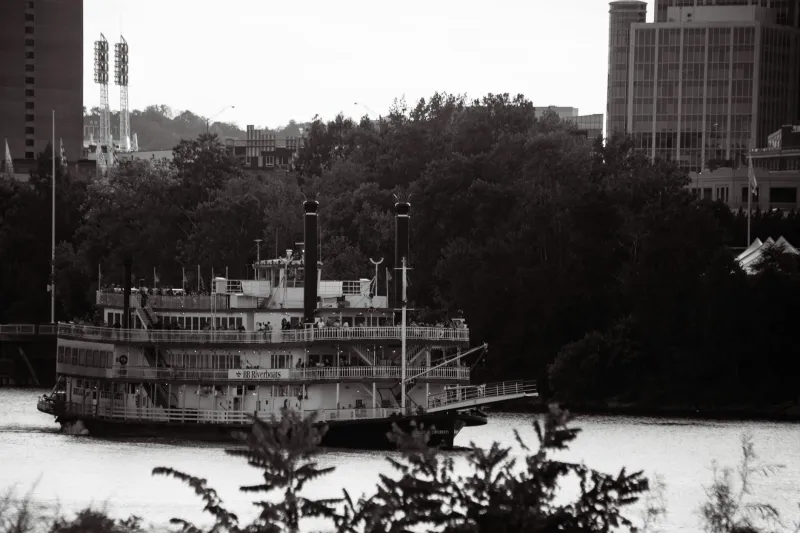
 Photo: Mississippi River, via www.worldatlas.com
What happened next defied all expectations. The wooden stall acted as a makeshift raft, and Napoleon, being an excellent swimmer, broke free and made it safely to shore. Meanwhile, the Belle Creole settled on the river bottom, taking with it Trosclair's entire cargo shipment: 200 barrels of molasses, 150 sacks of coffee beans, and 75 cases of imported French wine.
The Lawyer Who Saw Opportunity in Disaster
Most people would have considered the situation a mixed blessing — the horse lived, but the cargo was lost. But Trosclair's attorney, Armand Boudreaux, saw something different: a potential legal goldmine.
Boudreaux studied the insurance policy's language and discovered what he believed was a loophole large enough to drive a steamboat through. The policy covered "total loss of the insured animal during transport," but it didn't specifically define what constituted the "insured property."
"The policy was written to protect Mr. Trosclair's investment in this transportation venture," Boudreaux argued in his initial brief. "While the horse survived, the economic purpose of the journey — transporting valuable cargo to market — suffered total loss. The policy should compensate for the complete failure of the insured transportation event."
It was legal reasoning so creative it bordered on the surreal.
The Judge Who Bought the Argument
The case came before Judge Octave Thibodaux in the Louisiana State District Court. Thibodaux, a former plantation owner with a reputation for unconventional interpretations of contract law, listened to three days of testimony about insurance policy language, maritime law, and the precise definition of "total loss."
The insurance company's attorney, predictably, argued that since Napoleon was alive and healthy, no loss had occurred under the policy terms. The horse was the insured property, the horse survived, case closed.
But Boudreaux countered with an argument that would become legendary in insurance law circles. He claimed that the policy's true purpose was to protect Trosclair's commercial venture, not just the physical horse. When the steamboat sank, it destroyed the economic value of the entire transportation arrangement, making the surviving horse irrelevant to the actual loss.
"A horse insurance policy that only pays when the horse dies is like a umbrella that only works when it's not raining," Boudreaux told the court. "The policy must be interpreted to protect the insured's reasonable expectations of coverage."
Judge Thibodaux agreed.
The Ruling That Rewrote Insurance Law
In his written decision, Judge Thibodaux ruled that insurance policies should be interpreted based on their "practical commercial purpose" rather than their literal language. Since Trosclair had purchased the policy to protect his investment in a commercial transportation venture, and that venture had failed completely due to the steamboat sinking, the insurance company owed the full policy amount.
The fact that Napoleon had survived was, in the judge's reasoning, irrelevant to the actual economic loss suffered.
"The insured party purchased protection for a commercial endeavor involving the transport of valuable property," Thibodaux wrote. "When that endeavor failed due to circumstances beyond the insured's control, the policy's obligation was triggered regardless of the physical condition of the nominal subject of coverage."
It was judicial reasoning that would have made Alice in Wonderland proud.
The Appeal That Made It Worse
The insurance company immediately appealed to the Louisiana Supreme Court, confident that higher judicial minds would restore sanity to contract interpretation. Instead, the state's highest court not only upheld Thibodaux's ruling but expanded on it.
Justice Pierre Boudoin, writing for the majority, established what became known as the "Commercial Purpose Doctrine" in insurance law. According to this principle, insurance policies should be interpreted to fulfill their underlying commercial purpose, even when the literal language might suggest a different outcome.
"Insurance is purchased to provide security for business ventures, not to create word puzzles for lawyers," Boudoin wrote. "When the commercial purpose of an insurance arrangement is completely frustrated by covered circumstances, the policy has served its intended function by providing compensation."
The ruling was revolutionary — and completely baffling to insurance companies nationwide.
The Legacy of Napoleon's Swim
Trosclair v. Gulf States Mutual Insurance became required reading in law schools across the country, not because it represented good legal reasoning, but because it demonstrated how far creative contract interpretation could go. The case is still cited today, usually as an example of judicial decision-making gone wrong.
Napoleon lived for another twelve years, eventually siring dozens of foals and becoming something of a local celebrity. Trosclair used the insurance payout to rebuild his cargo business and reportedly never again purchased livestock insurance.
The insurance company, Gulf States Mutual, went out of business within five years, partly due to the financial impact of similar creative policy interpretations inspired by the Trosclair case.
Modern insurance policies now contain pages of specific language designed to prevent similar interpretative adventures. But legal scholars still study the case as an example of what happens when judicial creativity meets commercial common sense — and creativity wins.
As one insurance law textbook notes: "The Trosclair decision proves that in American law, sometimes the most logical outcome is the most illogical reasoning." It's a principle that would have made perfect sense to Napoleon — if horses could practice law.