Two Governments, One House, Zero Agreement: The Woman Who Got Tax Bills From Both Sides of a Border

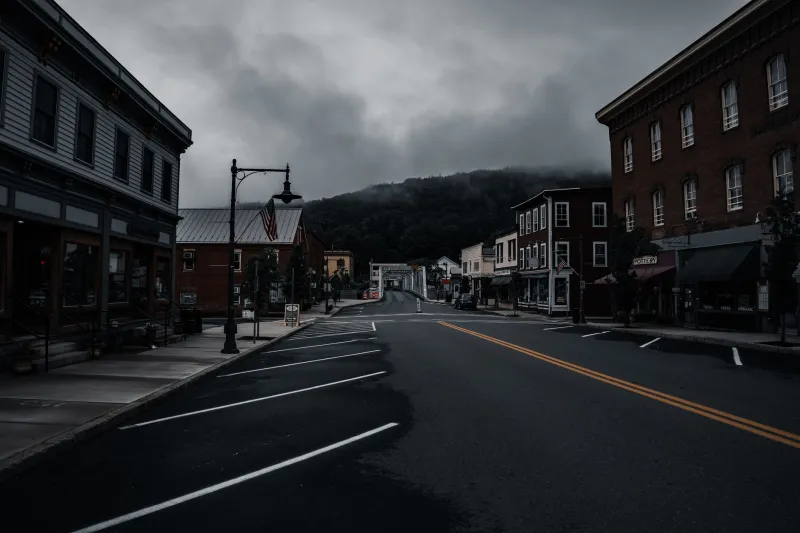
Photo by Photo by tommao wang on Unsplash on Unsplash
Most homeowners dread tax season. Clara Gorgas had a different problem. She dreaded it twice — once in U.S. dollars, and once in Canadian currency.
Her house sat on a stretch of land along the Vermont-Quebec border that had been quietly contested for the better part of a century. Not violently contested. Not dramatically contested. Just... administratively contested, in that particular bureaucratic way where nobody quite agrees on the line, nobody wants to be the one to officially redraw it, and everyone sort of hopes the problem resolves itself. It didn't resolve itself. It landed in Clara Gorgas's mailbox.
The Border That Wasn't Quite a Border
The boundary between Vermont and Quebec has a complicated history that most Americans — and honestly, most Canadians — don't know much about. The original survey, conducted in the early 1800s, was done with equipment that was, by modern standards, impressively inaccurate. Subsequent resurveys produced slightly different results. In most places, the differences were small enough that they didn't matter much. But in a handful of locations, particularly in the Northeast Kingdom region of Vermont, the discrepancies created genuine ambiguity about which side of the line certain parcels of land actually sat on.
Gorgas purchased her property in 1987. The deed listed a Vermont address. She paid Vermont property taxes. She voted in Vermont elections. She sent her kids to a Vermont school. By every practical measure, she was a Vermont homeowner.
Except that in 1991, a Canadian municipal assessor conducting a routine land survey concluded that her property — specifically, the northern portion of her lot, which included her house — technically fell within the jurisdiction of a small Quebec municipality. The assessor's office sent her a tax bill. In Canadian dollars. For a house she'd been paying Vermont taxes on for four years.
Both Sides Said: Yes, That's Ours
What followed was less a legal battle and more a legal standoff. Vermont's tax authority maintained that Gorgas owed state and local property taxes based on the deed and the original survey. Quebec's municipal government maintained that its own resurvey superseded the original, and that Gorgas owed taxes to them as well.
Neither side was willing to back down, because backing down meant implicitly conceding the border question — and the border question had implications that went well beyond one woman's property. There were other parcels in the area. There were roads. There was a small stretch of a local highway that, depending on which survey you believed, was either American or Canadian infrastructure.
Gorgas hired a property attorney. Her attorney wrote letters. The letters went unanswered for months, then were answered with more letters. Vermont officials said the matter was a federal question. Federal officials said it was a state and provincial matter. Canadian federal authorities agreed it was a provincial matter. Quebec said it was a municipal matter. The municipal assessor said she just worked there and was doing her job.
The Part Where It Gets Genuinely Strange
For three consecutive years — 1991, 1992, and 1993 — Clara Gorgas paid property taxes twice. Not because she was required to. Not because any court ordered her to. But because her attorney advised her that failing to pay either bill while the dispute was unresolved could expose her to penalties from both sides, and that the safest move was to pay and then seek reimbursement once the matter was settled.
The matter was not quickly settled.
In the meantime, Gorgas found herself in the genuinely surreal position of being a Vermont homeowner who received mail from a Canadian municipal government, paid taxes in two currencies, and technically had the right to argue — though she never did — that her property might qualify for certain Quebec provincial services. She did not pursue this line of thinking. Her attorney advised against it.
The situation drew brief attention from a Burlington, Vermont newspaper in 1993, which ran a short item about the case under the headline "Vermont Woman Pays Taxes to Canada." The story was picked up by a wire service and ran in a handful of regional papers before fading from public attention entirely.
How It Ended (Sort Of)
The dispute was formally resolved in 1995 when U.S. and Canadian boundary commissioners — a body that exists specifically to handle these kinds of disagreements under the terms of the 1908 Boundary Waters Treaty and subsequent agreements — reviewed the competing surveys and issued a determination. The property, they concluded, was in Vermont.
Gorgas received reimbursement from the Quebec municipality for the taxes she had paid them. The reimbursement took fourteen months to arrive and came with a cover letter that, according to Gorgas, expressed no apology but did wish her well.
She sold the house in 1997.
The Lesson Nobody Wanted to Learn
Stories like this are easy to laugh at — two governments squabbling over one woman's kitchen, both sending bills, neither blinking. But they point to something genuinely important about how borders work, or more precisely, how they sometimes don't.
International boundaries aren't lines on a map so much as agreements between governments, and agreements can be imprecise. When the precision breaks down, it's rarely the governments that feel it first. It's the person who just wanted to own a house and maybe have a garden.
Clara Gorgas had the garden. She also had a filing cabinet full of tax documents from two countries.
Some things you just can't make up.