The Homecoming That Became an Arrest
When Staff Sergeant Robert Chen stepped off the transport plane at Travis Air Force Base in California in 1953, he expected to see his family, receive medical treatment, and begin the long process of readjusting to civilian life. Instead, he was met by military police officers with handcuffs and a warrant for his arrest.
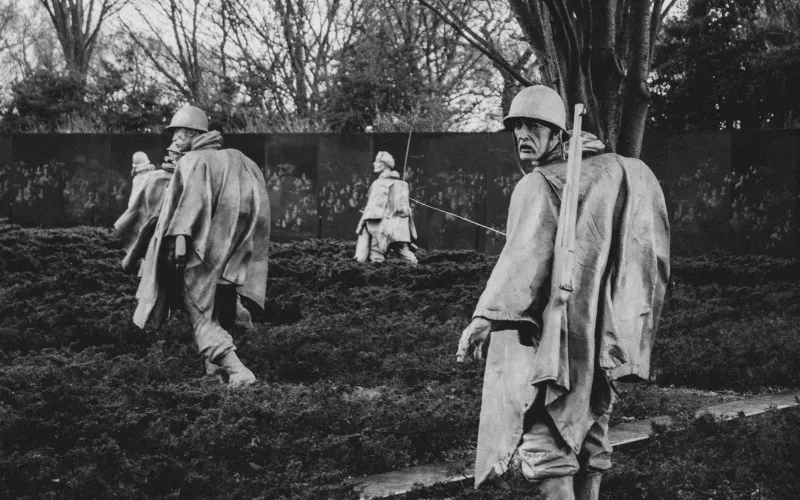
 Photo: Staff Sergeant Robert Chen, via taskandpurpose.com
Chen had spent three years as a prisoner of war in North Korea, enduring conditions that would later be recognized as some of the most brutal of the Korean conflict. But according to his military records, he hadn't been captured by the enemy. He had simply walked away from his unit and disappeared.
The paperwork said he was a deserter. The scars on his body told a very different story.
When Bureaucracy Rewrites History
The catastrophic mix-up began in 1950 when Chen's unit was overrun during a Chinese offensive near the Chosin Reservoir. In the chaos of retreat, several soldiers were reported missing in action, but the fog of war made it impossible to determine who had been killed, captured, or separated from their units.
Chen had actually been wounded and taken prisoner during the battle, but the paperwork trail that should have documented his capture never made it through military channels. His commanding officer, who might have provided crucial testimony about the circumstances of Chen's disappearance, was killed in the same engagement.
Without witness statements or evidence of capture, military bureaucrats made a fateful decision six months later. Chen was reclassified from "Missing in Action" to "Absent Without Leave," and eventually to "Desertion in the Face of the Enemy" when he failed to return to duty.
The reclassification triggered an automatic court-martial process, even though the defendant was thousands of miles away in a North Korean prison camp.
The Prisoner Who Became a Fugitive
While Chen was enduring interrogation, forced labor, and systematic starvation in Communist custody, his military record was painting him as a coward who had abandoned his fellow soldiers. The Army stopped his pay, removed his name from casualty reports, and began preparing a case for his prosecution.
The bureaucratic transformation was so complete that when prisoner exchange negotiations began in 1952, Chen's name wasn't even on the list of Americans the military expected to recover. As far as official records were concerned, he wasn't a prisoner—he was a fugitive hiding somewhere in Asia.
Chen learned about his changed status from other American prisoners who had been captured more recently. They told him that mail from home had stopped coming because his family had been notified he was considered a deserter rather than a prisoner of war.
The psychological impact was devastating. Chen was fighting to survive captivity while knowing that his own country had already decided he was a traitor.
The Impossible Task of Proving Your Own Capture
When prisoner exchanges finally began, Chen faced a unique legal challenge. He had to prove that he had been captured rather than having voluntarily surrendered or deserted to the enemy. Without witnesses or documentation, his word alone stood against three years of military paperwork.
The Army's position was that Chen had to demonstrate his innocence rather than having the prosecution prove his guilt. The burden of proof had been reversed by bureaucratic reclassification, creating a legal nightmare that military lawyers had never encountered before.
Chen's defense team faced the surreal task of using his own suffering as evidence. Medical examinations documented torture, malnutrition, and injuries consistent with forced captivity, but military prosecutors argued that these could have been self-inflicted or the result of voluntary collaboration with enemy forces.
The case became even more complex when other returned prisoners testified about Chen's behavior in captivity. Some described him as a model prisoner who had refused to cooperate with Communist interrogators. Others, traumatized by their own experiences, gave contradictory accounts that seemed to support the desertion charges.
The Trial That Revealed Systemic Failures
Chen's court-martial, which began four months after his return, exposed serious flaws in how the military handled missing personnel during active combat operations. The prosecution struggled to explain how a deserter had ended up in official Communist custody, while the defense highlighted the arbitrary nature of reclassification decisions made by desk officers thousands of miles from the battlefield.
The trial revealed that dozens of other soldiers had been similarly reclassified during the Korean conflict, though Chen's case was unique in that he had actually survived to contest the charges. Many families had spent years believing their loved ones were deserters when they had actually died in enemy custody.
Military investigators discovered that the reclassification system was designed more for administrative efficiency than accuracy. It was easier to close cases by declaring soldiers deserters than to maintain them indefinitely as missing in action.
Justice Delayed and Delivered
After six weeks of testimony, the court-martial panel deliberated for less than two hours before finding Chen innocent of all charges. The evidence of his captivity was overwhelming, and the military's case collapsed under scrutiny.
But the damage to Chen's life was irreversible. He had lost three years of pay, benefits, and promotion opportunities. His family had endured social stigma based on his supposed desertion. His military career was effectively over, despite his exoneration.
The Army offered Chen a formal apology and retroactive pay, but refused to acknowledge systemic problems with their reclassification procedures. Similar cases continued to emerge throughout the 1950s as more prisoners returned from various conflicts.
The Legacy of Paperwork Warfare
Chen's case led to reforms in how the military handles missing personnel, but the fundamental tension between bureaucratic efficiency and individual justice remains. Modern military procedures require multiple confirmations before reclassifying missing soldiers, though mistakes still occur.
The psychological impact on Chen was profound and lasting. He had survived enemy captivity only to face betrayal by his own military system. The man who had endured torture rather than betray his country found himself having to prove his loyalty to the very institution he had served.
Chen's story illustrates how bureaucratic systems can create their own reality, transforming heroes into villains through nothing more than administrative decisions made by people who never saw the battlefield.