The Walking Dead Man Who Never Missed a Tax Payment
When Death Certificates Don't Stop the IRS
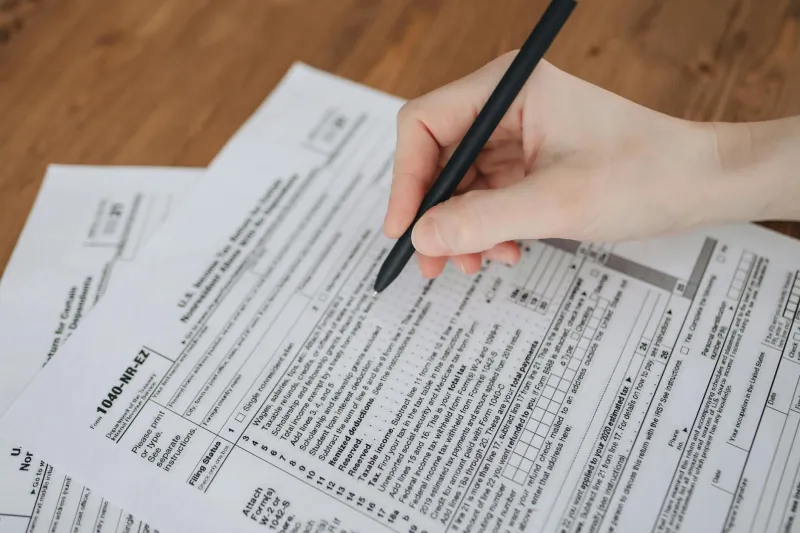
Harold Wickham had what most people would consider a normal Tuesday morning routine in 1987: coffee, newspaper, and filing his annual tax return. What made Harold's situation extraordinary was that according to the Social Security Administration, he'd been dead for six months.
 Photo: Harold Wickham, via cdn.vectorstock.com
The 42-year-old Army veteran from Springfield, Illinois, had become trapped in America's most absurd catch-22. A clerical error following routine military medical records processing had officially terminated his existence, yet every other government agency continued treating him like a living, breathing, tax-paying citizen.
 Photo: Springfield, Illinois, via image.freepik.com
"I kept getting my voter registration card," Harold recalled years later. "The DMV renewed my license without question. But Social Security wouldn't return my calls because, and I quote, 'deceased individuals cannot conduct business with this office.'"
The Bureaucratic Bermuda Triangle
The error originated during a massive digitization project at the Department of Veterans Affairs. Harold's medical discharge paperwork from 1969 contained a clerical notation that was supposed to indicate "medical review completed" but was mistakenly coded as "deceased veteran - benefits terminated." This single keystroke created a domino effect that would span three decades.
What followed defied every assumption about how government databases communicate. The Social Security Administration dutifully recorded Harold's death and stopped processing any requests from his Social Security number. Medicare cancelled his future benefits. The Department of Veterans Affairs closed his file with a flag noting "veteran deceased - no further action required."
Meanwhile, the Internal Revenue Service, the Department of Motor Vehicles, the Census Bureau, and his local election board continued operating as if Harold was very much alive. Each April, the IRS processed his tax return. Every few years, he'd receive jury duty summons. When he moved apartments in 1993, the Postal Service updated his address without hesitation.
"It was like living in two different countries," Harold explained. "In one country, I was a regular guy who paid taxes and voted. In the other country, I was a ghost who couldn't collect Social Security or get veterans' benefits."
The Audit That Raised the Dead
The contradiction might have continued indefinitely if not for an overzealous IRS auditor named Patricia Chen. In 2017, Chen was conducting a routine review of taxpayers who had filed returns for more than 20 consecutive years without claiming Social Security benefits.
 Photo: Patricia Chen, via i.ytimg.com
Harold's file immediately caught her attention. Here was someone who had filed 30 straight years of tax returns, maintained steady employment, and never once attempted to claim Social Security - despite being well past retirement age. Chen's first instinct was fraud investigation.
"I figured someone was using a dead person's Social Security number to avoid paying taxes on unreported income," Chen later testified to a Congressional subcommittee investigating the case. "I ran the number through our deceased taxpayer database and got a match. That's when things got weird."
The deeper Chen dug, the stranger Harold's case became. His tax returns showed legitimate W-2 income from the same employer for decades. His address matched voter registration records. He'd even received a clean audit in 1995. Yet according to the federal death index, Harold Wickham had died in 1987 at age 42.
Resurrection by Spreadsheet
Chen's investigation triggered the first inter-agency review of Harold's status in 30 years. What investigators found was a masterclass in bureaucratic compartmentalization. Different agencies had been maintaining contradictory records about the same person for three decades without any system flagging the inconsistency.
The Social Security Administration had Harold listed as deceased since 1987. The IRS had him as an active taxpayer. The Department of Motor Vehicles showed a current license. The Census Bureau counted him in his district. The Department of Veterans Affairs had closed his file, but the National Personnel Records Center still maintained his service records as belonging to a living veteran.
"It was like each agency existed in its own universe," explained Dr. Margaret Foster, a public administration expert who studied the case. "The systems that were supposed to cross-reference these databases had been designed by different contractors using incompatible protocols. Harold fell into the cracks between them."
The correction process took eight months and required sign-offs from six different agencies. Harold had to provide DNA samples, fingerprints, and sworn testimony from family members to prove he hadn't died and been replaced by an impostor. The Social Security Administration ultimately paid him $127,000 in back benefits, plus interest.
The Paperwork Paradox
Harold's case exposed a fundamental flaw in how modern governments manage citizen records. Despite billions spent on database integration and digital record-keeping, the basic question of who is alive and who is dead can still produce contradictory answers depending on which agency you ask.
Congressional investigators found at least 12,000 similar cases of Americans who were simultaneously dead and alive in federal databases. Most were resolved within months rather than decades, but Harold's case had slipped through every safety net designed to catch such errors.
"The truly remarkable thing," noted government accountability researcher James Morrison, "is that Harold kept paying taxes the entire time. He could have claimed to be dead and stopped filing returns, but he was too honest. His integrity is what made the error so hard to detect."
Today, Harold Wickham is officially alive in all government databases. He's collected his back Social Security benefits and even received a formal apology from three different agency directors. But he still keeps copies of his tax returns in a fireproof safe, just in case the government decides to kill him off again.
"I learned never to trust that the government knows whether you exist," he said. "Sometimes the best proof of life is a cancelled check to the IRS."