He Survived Both Atomic Bombs and Spent Decades Trying to Prove It
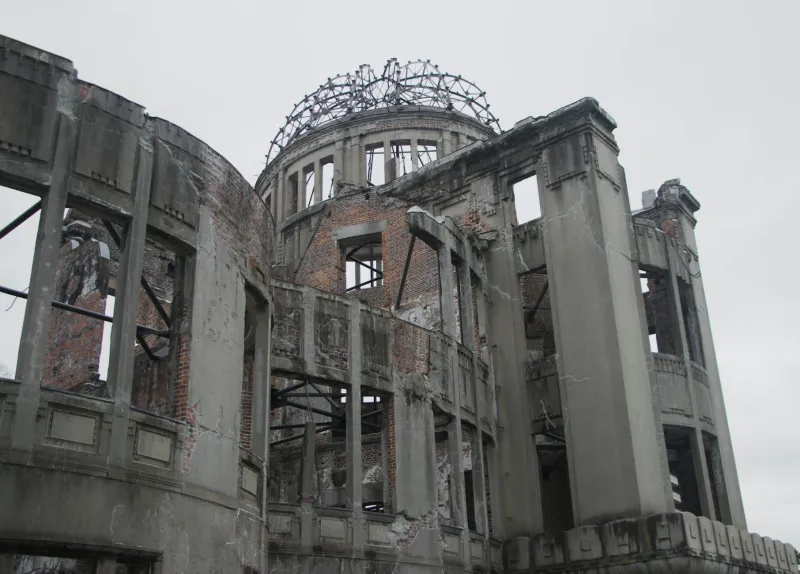
He Survived Both Atomic Bombs and Spent Decades Trying to Prove It
There are stories that sound like fiction dressed up in a history textbook. And then there's Tsutomu Yamaguchi — a man whose life contained something so statistically improbable, so cosmically strange, that the Japanese government spent decades refusing to put it on paper.
He survived both atomic bombs dropped on Japan in August 1945. Not metaphorically. Not from a safe distance. He was close enough to feel the heat of both blasts, close enough to be injured by both, and alive enough afterward to spend the rest of his long life trying to get someone — anyone — in an official capacity to simply write it down and say: yes, this happened.
The Wrong Place, Twice
In early August 1945, Yamaguchi was a 29-year-old naval engineer working for Mitsubishi Heavy Industries. He'd been sent to Hiroshima on a three-month business assignment, and by August 6th, he was wrapping things up and preparing to head home.
Home, for Yamaguchi, was Nagasaki.
He never made it to his train that morning. At 8:15 a.m., the Enola Gay dropped Little Boy over Hiroshima. Yamaguchi was roughly two miles from the hypocenter — close enough to be thrown to the ground by the shockwave, close enough to suffer serious burns on his arms and face, close enough to watch the sky turn colors that don't have names.
He survived by diving into a ditch. He spent the night in an air raid shelter, found two colleagues who had also made it through, and — because this is the part where the story starts to feel genuinely unreal — he got on a train bound for Nagasaki two days later.
He arrived on August 8th. The second bomb fell on August 9th.
Lightning, Meet Same Spot
Yamaguchi was in his Nagasaki office, reporting to his supervisor about what he'd witnessed in Hiroshima, when the Fat Man detonated over the city at 11:02 a.m. He was approximately two miles from that hypocenter too — almost the identical distance as the first blast.
His supervisor, according to accounts Yamaguchi later gave, didn't believe a word of the Hiroshima story. He reportedly told Yamaguchi that one bomb couldn't possibly have destroyed an entire city. Seconds later, the windows blew in.
Yamaguchi survived again. His bandages were blown off. His burns were reopened. He lost his hair. He spent weeks recovering, suffering from radiation sickness alongside his wife and daughter, who had also been exposed in Nagasaki.
He lived. He went back to work. He raised a family. He tried to move on.
The Bureaucratic Wall
Here's where the story takes a turn that feels almost more absurd than the bombs themselves.
Japan had a formal system for recognizing survivors of the atomic bombings — hibakusha status, which came with medical benefits and official acknowledgment. Yamaguchi qualified as a Nagasaki survivor without much trouble. But when he tried to get his Hiroshima experience formally recognized as well, he ran into a wall made entirely of paperwork and institutional disbelief.
For decades, the Japanese government did not have an official category for someone who had survived both bombings. The bureaucratic logic seemed to be that such a thing was too unlikely to have happened in any meaningful number of cases — and therefore, it didn't need a formal process. Never mind that there were actually several hundred people who survived both cities. The government's position, for a long time, was essentially: this is too strange to systematize.
Yamaguchi spent years being recognized as a single-city survivor while his full story sat in a kind of official limbo. He wasn't denied, exactly. He just wasn't acknowledged.
The Recognition That Came Late
It wasn't until 2009 — sixty-four years after the bombs fell — that the Japanese government formally recognized Tsutomu Yamaguchi as a nijū hibakusha: a double bomb survivor. He was 93 years old.
He is the only person to have received that designation officially, though historians believe the actual number of people who experienced both blasts numbered in the hundreds. Most of them never sought recognition, or died before the bureaucratic machinery caught up with reality.
Yamaguchi spent his final years as an anti-nuclear activist, speaking publicly about what he'd witnessed and pushing for disarmament. He died in January 2010 at the age of 93, just months after receiving the recognition he'd sought for most of his adult life.
Why This Story Still Matters
The easiest thing to take from Yamaguchi's story is the math — the sheer astronomical improbability of being in the wrong city on the wrong morning, twice, in the span of three days. That alone is enough to make your brain stall out.
But the part that sticks, at least from where we're sitting, is the other story running underneath it. The one where a man who had lived through something genuinely unprecedented spent the better part of six decades being told, in bureaucratic language, that his experience didn't fit the available paperwork.
Reality doesn't always file neatly. Sometimes the truth is so strange that the systems built to record it simply weren't designed for it. Yamaguchi knew that better than almost anyone.
He just had to wait long enough for the world to catch up.