The Post Office That Delivered Mail to Nowhere for Four Decades
The Town That Wasn't There
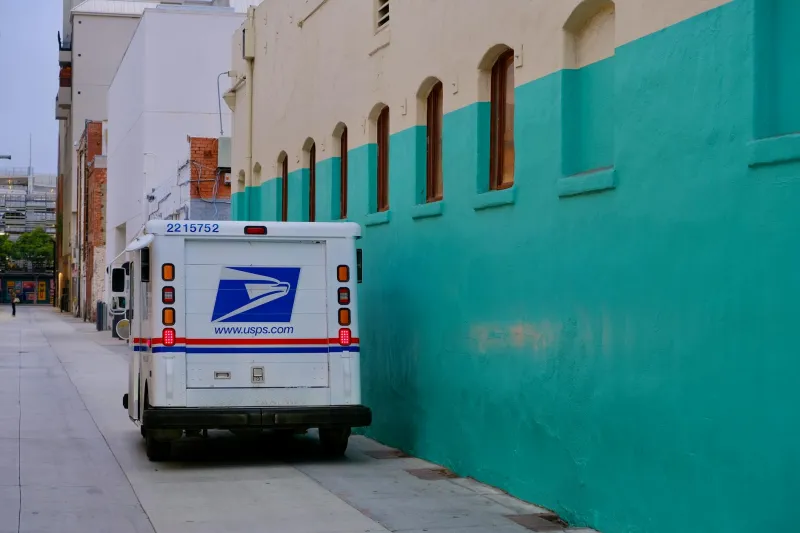
Every Tuesday and Friday for nearly four decades, postal worker Eugene Kowalski drove his mail truck down a gravel road that led to nowhere. His destination was Thurston, Ohio — population zero, according to every official record that mattered. The town had been dissolved by the state in 1940, its residents relocated, its buildings demolished or abandoned. Yet somehow, mail kept arriving at addresses that shouldn't have existed for people who weren't supposed to be there.
Kowalski never questioned the route. The addresses were in his book, the mail was sorted and labeled, and his job was to deliver it. If the bureaucrats in Columbus said Thurston didn't exist, that was their problem. He had letters to deliver.
When Progress Erased a Community
Thurston's disappearance began with the best of intentions. In 1940, the Works Progress Administration identified the small farming community as part of a flood-prone area that needed to be cleared for a new reservoir project. The federal government offered to buy out all 127 residents, relocate them to safer ground, and transform the valley into a recreational lake that would benefit the entire region.
Most families took the buyout and moved to nearby towns. The few holdouts were eventually convinced to leave through a combination of financial incentives and bureaucratic pressure. By late 1940, Thurston was officially empty. The post office was closed, mail service was discontinued, and the community was removed from state records.
The reservoir project, however, never materialized. Federal priorities shifted with America's entry into World War II, and the Thurston valley was quietly forgotten by everyone except the mapmakers who had already erased it from their charts.
The Ghosts in the System
What nobody anticipated was the stubborn persistence of institutional memory. While Thurston had vanished from state records, it remained embedded in dozens of federal databases. Social Security records, military personnel files, insurance policies, and subscription services all continued to list Thurston addresses for people who had supposedly moved away.
The confusion was compounded by the fact that some former residents had simply moved a few miles down the road to neighboring communities but continued to use their old Thurston addresses out of habit or nostalgia. When they filled out forms, paid bills, or renewed subscriptions, they wrote down the addresses they remembered, not realizing they were perpetuating the existence of a town that had been officially erased.
The Mailman's Dilemma
Eugene Kowalski inherited the Thurston route in 1952 when he joined the postal service. His supervisor handed him a bag of mail and a set of directions to addresses that, according to his map, were located in an empty field. When he arrived at the supposed location of "123 Main Street, Thurston," he found only overgrown farmland and the concrete foundation of what had once been a house.
A lesser postal worker might have returned the mail as undeliverable. But Kowalski had grown up in rural Ohio, and he understood that people moved around, rebuilt, and made do. He began asking questions at nearby farms and discovered that several families in the area were still receiving mail addressed to their old Thurston homes, even though they now lived miles away.
"I figured if people were expecting their mail, it was my job to get it to them," Kowalski later explained. He began tracking down the intended recipients, following forwarding addresses that led to forwarding addresses, creating an informal network that kept Thurston alive in the only way that mattered: the daily delivery of letters and packages.
The Persistence of Paper
By the 1960s, the Thurston mail route had taken on a life of its own. Veterans Administration checks arrived monthly for former residents who had served in Korea and Vietnam. Insurance companies sent policy updates to addresses that existed only in their computers. Magazine subscriptions renewed automatically, creating a steady stream of publications flowing to a town that had been gone for decades.
The most poignant mail came from family members who had lost touch with relatives after the 1940 relocation. Children who had moved away as teenagers would send birthday cards and Christmas greetings to their parents' last known address in Thurston, unaware that the town no longer existed. Kowalski became an unofficial family reunion coordinator, tracking down recipients and occasionally hand-delivering letters that had been searching for their intended targets for years.
The End of an Era
The Thurston mail route finally ended in 1977, not because anyone in Washington discovered the administrative error, but because Eugene Kowalski retired. His replacement, a by-the-books postal worker named Patricia Mills, took one look at the route assignments and immediately flagged the nonexistent addresses as a clerical error.
"I drove out there on my first day and found nothing but empty fields," Mills recalled. "I couldn't believe the previous guy had been delivering mail to imaginary addresses for twenty-five years." She filed a report recommending that the Thurston route be discontinued, and within weeks, the last traces of the town were finally purged from postal service records.
The handful of people still receiving mail at Thurston addresses were notified that their service would be transferred to their actual residential locations. Most had no idea they had been part of a decades-long administrative ghost story.
What We Leave Behind
The Thurston mail route reveals something profound about the persistence of human connections in an increasingly digital world. Long after the physical community had vanished, the relationships and obligations that had defined it continued to exist in the form of letters, bills, and government correspondence.
Eugene Kowalski, who died in 1994, never saw his unofficial preservation of Thurston as anything extraordinary. "People needed their mail," he would say when asked about the route. "That's what the postal service is for." But his quiet dedication kept alive something more important than a town — he maintained the human connections that geography and bureaucracy had tried to erase.
Today, the Thurston valley is exactly what government planners intended it to be in 1940: empty farmland waiting for a development project that never came. But for 37 years, it was something else entirely — a place that existed primarily in the daily ritual of mail delivery, proving that sometimes the most important communities are the ones that live on only in our willingness to remember them.
In an age of instant digital communication, the story of Thurston's phantom postal route seems almost quaint. But it reminds us that before email and text messages, human connection depended on the simple act of putting a letter in the mail and trusting that someone, somewhere, would make sure it reached its destination — even if that destination was nowhere at all.