When the Ocean Played the Cruelest Practical Joke in Maritime History
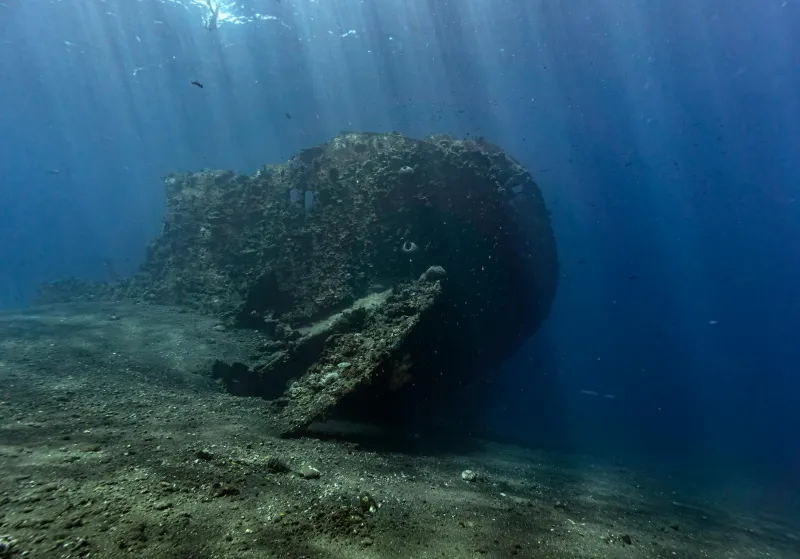
If you pitched this story to a Hollywood producer, they'd laugh you out of the room. Two different ships, separated by 47 years, sinking in almost the exact same spot under nearly identical circumstances? "Too convenient," they'd say. "Audiences will never buy it."
But the North Atlantic doesn't care what Hollywood thinks.
The First Act: The SS Waratah's Final Curtain
In July 1909, the SS Waratah departed Durban, South Africa, bound for Cape Town with 211 passengers and crew aboard. The 465-foot steamship was carrying a mixed cargo of wool, hides, and general freight – nothing particularly unusual for a vessel plying the South African coast.
What happened next became one of maritime history's greatest mysteries. The Waratah simply vanished. No distress signal, no wreckage, no survivors. For months, search parties scoured the coastline between Durban and Cape Town. The ship had literally disappeared from the face of the earth.
It wasn't until 1999 – nearly a century later – that marine archaeologists finally located the Waratah's remains off the coast of South Africa, roughly 170 miles northeast of East London. The wreck lay in 150 meters of water, broken into several pieces on the seabed.
Enter the Encore Performance
Fast-forward to 1956. The MV Klaarwater, a 441-foot cargo vessel, was making the same run along the South African coast. Like the Waratah, she carried 214 souls and a cargo hold filled with wool and general freight. The weather conditions were strikingly similar to that July day in 1909 – rough seas, poor visibility, and strong winds.
On October 15, 1956, the Klaarwater sent out a brief distress signal before going silent forever. Search and rescue teams rushed to the area, but found nothing except empty ocean. The ship had vanished as completely as her predecessor.
When divers finally located the Klaarwater's wreck in 1962, they made a discovery that sent chills through the maritime community. The ship lay just 2.3 nautical miles from where the Waratah had met her end 47 years earlier.
The Mathematics of the Impossible
Let's talk numbers, because the coincidences go far beyond location. Both ships were roughly the same size – within 24 feet of each other in length. Both carried nearly identical passenger and crew counts. Both were transporting wool as their primary cargo. Both sank during the Southern Hemisphere's spring season. Both sent brief or no distress signals before disappearing.
Maritime statisticians later calculated that the odds of two vessels of similar size, carrying similar cargo and passenger loads, sinking within such a small area decades apart would be roughly 1 in 847,000. Those are lottery-winning odds.
But the ocean wasn't finished with its cosmic joke.
The Investigation That Questioned Reality
When the South African Maritime Investigation Board examined both wrecks in the 1960s, they found themselves in an uncomfortable position. The evidence pointed to nearly identical causes for both disasters – sudden structural failure during heavy weather in what appeared to be the same underwater canyon system.
The area, investigators discovered, featured unusual underwater topography that created unpredictable wave patterns and powerful downdrafts. Ships passing through during rough weather could be subjected to forces that their designers never anticipated.
But even the investigators struggled to explain why two ships, decades apart, would encounter the exact same deadly conditions in the exact same spot. The official reports read like someone trying very hard not to use the word "cursed."
The Families' Long Wait
For the families of both disasters, the coincidences offered little comfort. Margaret Holsworth, whose grandfather died on the Waratah, spent decades searching for answers about his fate. When the Klaarwater sank in almost the same spot, she told reporters it felt like "the ocean was mocking our grief."
Similarly, the families of Klaarwater victims found themselves connected to a tragedy that predated their own by nearly half a century. Support groups formed that included relatives from both disasters – perhaps the only such organizations in maritime history.
When Reality Writes Fiction
Today, the area off the South African coast where both ships lie is known informally among sailors as the "Twin Graves." Modern navigation systems flag it as a hazard zone, though commercial traffic still passes through regularly without incident.
Maritime historians continue to study both wrecks, not just for what they reveal about the ships themselves, but for what they suggest about the strange patterns that sometimes emerge from chaos. The story has become a case study in probability theory, used in statistics courses to illustrate how unlikely events can cluster in ways that seem to defy logic.
But for anyone who's spent time at sea, the story resonates on a different level. The ocean, sailors will tell you, has a long memory and an even longer sense of humor. Sometimes it plays its jokes across decades, waiting patiently for the perfect setup before delivering the punchline.
In the case of the Waratah and the Klaarwater, that punchline was written in salt water and steel, in a location where the sea itself seems to have decided that some stories are worth repeating – even if nobody would believe them if they weren't absolutely, impossibly true.