The Secret City Where Uncle Sam Was Your Landlord, Grocer, and Boss
The American City That Didn't Exist on Any Map
Between 1943 and 1945, one of the largest cities in Tennessee was completely invisible to the outside world. Oak Ridge didn't appear on maps, wasn't listed in phone directories, and couldn't be reached by civilian transportation. Mail addressed to the city was returned as "undeliverable" — even though 75,000 people lived and worked there every day.
Oak Ridge was America's first experiment in total government control of daily life, a place where federal agents decided who could buy groceries, which children could attend school, and whether married couples could live in the same house.
The residents knew they were building something important for the war effort, but most had no idea they were creating the uranium that would end World War II.
Building a City From Nothing in 18 Months
In 1942, the U.S. Army Corps of Engineers received orders to construct a massive industrial facility in rural Tennessee as part of the top-secret Manhattan Project. The site needed to be isolated, have access to enormous amounts of electricity from the Tennessee Valley Authority, and be large enough to house tens of thousands of workers.
They chose a 59,000-acre area near Knoxville and began forcibly purchasing farms and homes from 3,000 families who were given just weeks to relocate. The government paid fair market value but made it clear that refusal wasn't an option — this was a matter of national security.
Within 18 months, the Corps of Engineers had built the world's fifth-largest city in Tennessee, complete with residential neighborhoods, shopping districts, schools, hospitals, and recreational facilities. The construction project employed 75,000 workers and consumed more concrete than was used to build the Pentagon.
Life Behind the Fence
Oak Ridge was surrounded by a seven-foot fence topped with barbed wire and guarded by military police at seven checkpoints. Every person entering or leaving the city had to show identification and state their business. Visitors needed advance approval from federal security officers, and even residents' family members couldn't visit without government permission.
Inside the fence, the federal government controlled every aspect of daily life. The Army owned all the housing and assigned families to homes based on job classification and family size. Scientists and engineers got larger houses in better neighborhoods, while construction workers were assigned to dormitories or trailer parks.
The government also owned and operated every business in Oak Ridge. Federal employees ran the grocery stores, gas stations, restaurants, movie theaters, and beauty salons. Prices were set by government administrators, and inventory was controlled by federal purchasing agents who decided what products residents could buy.
The Company Town Where the Company Was America
Shopping in Oak Ridge meant shopping at government-run stores with government-employed cashiers selling government-approved merchandise. The largest store was operated by the Army Corps of Engineers and staffed by federal civilian employees who had security clearances just to work the checkout counters.
Residents paid rent directly to the federal government, which also provided all utilities, garbage collection, and maintenance services. The government operated the schools, hired the teachers, and decided which textbooks children would use. Even the churches were built on government land and required federal approval for their activities.
Bank accounts were monitored by federal agents, mail was subject to censorship, and phone calls could be recorded without warning. Residents accepted these restrictions because they understood they were contributing to the war effort, but most had no idea exactly what they were building.
The Secret Everyone Lived With But Couldn't Discuss
Oak Ridge's three main facilities were known only by code names: X-10, Y-12, and K-25. Workers at each facility knew their specific jobs but were forbidden from discussing their work with anyone, including family members and coworkers at other facilities.
The Y-12 facility employed 22,000 people operating massive electromagnetic separators called calutrons, which separated uranium-235 from uranium-238. Workers monitored dials and adjusted controls according to precise instructions, but most had no idea they were enriching uranium for atomic weapons.
K-25 was even more mysterious — a massive gaseous diffusion plant that covered 44 acres under a single roof. The 12,000 workers there operated equipment that gradually concentrated uranium isotopes, but the process was so secret that employees weren't told what they were producing or why.
When the Secret Finally Made Sense
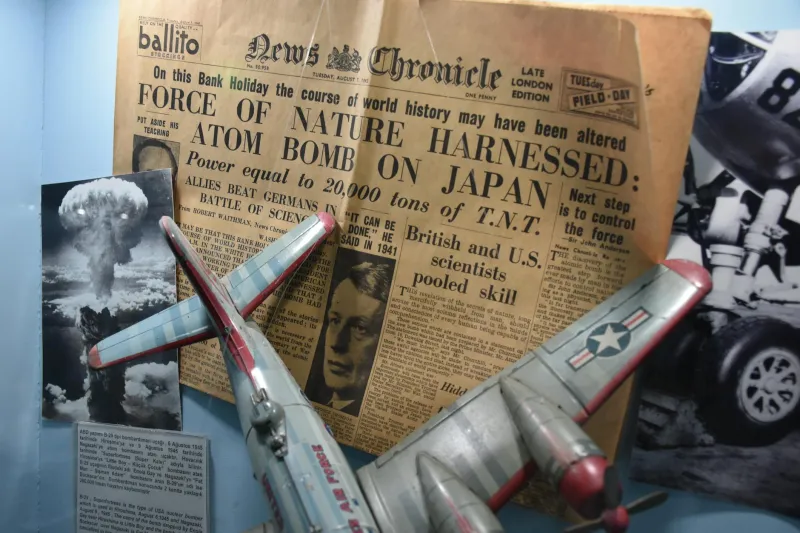
On August 6, 1945, the Enola Gay dropped an atomic bomb on Hiroshima. The next morning, Oak Ridge residents woke up to newspaper headlines explaining what they had been building for the past three years. The uranium that destroyed Hiroshima had been enriched in their secret city.
Sudenly, all the security restrictions, the government control, and the isolation made perfect sense. Oak Ridge had been the primary production site for weapons-grade uranium, one of the most closely guarded secrets of World War II.
Resident reactions ranged from pride to horror. Many felt honored to have contributed to ending the war and saving American lives. Others were disturbed to learn they had unknowingly participated in creating history's most destructive weapon.
The Transition Back to Normal America
After the war ended, the government faced an unprecedented challenge: how do you convert a secret military city into a normal American community? Oak Ridge had no civilian government, no private businesses, and no legal framework for independent operation.
The Atomic Energy Commission gradually sold government-owned houses to residents and allowed private businesses to open. The fences came down in 1949, and Oak Ridge was incorporated as a regular Tennessee city in 1959 — 16 years after it was built.
But the transition wasn't smooth. Many residents had grown accustomed to government-provided services and subsidized living costs. Private grocery stores charged higher prices than the government commissaries. Home ownership came with maintenance responsibilities that the government had previously handled.
The Legacy of America's Secret City
Today, Oak Ridge is home to several national laboratories and remains a center for nuclear research and energy technology. The city's history is preserved in museums and historical sites, but many original buildings have been demolished or converted to other uses.
What makes Oak Ridge's story remarkable isn't just that the government built a secret city, but that 75,000 Americans willingly lived under total federal control for years without knowing exactly why. They trusted that their government had good reasons for the restrictions and secrecy, even when those reasons couldn't be explained.
Oak Ridge represents both the greatest achievement and the most troubling precedent of America's wartime mobilization — proof that democratic citizens will accept authoritarian control when they believe it serves a greater purpose, and a reminder of how much individual freedom Americans were willing to sacrifice in the name of national security.
The secret city worked because residents believed in their mission, even when they didn't understand it. Whether that level of trust and compliance could exist in modern America remains an open question.