When Death Came Early for the USS Wahoo
Imagine checking your mail one day and finding your own obituary. That's essentially what happened to the crew of the USS Wahoo in late 1943, when they discovered through intercepted enemy radio broadcasts that the U.S. Navy had declared them dead and sunk.
The problem? They were very much alive, actively hunting Japanese vessels in the Sea of Japan, and had no idea their families back home were receiving condolence letters.
The Paperwork That Killed a Fighting Ship
The bureaucratic nightmare began in October 1943 when the Wahoo failed to make a scheduled radio check-in during what would be its seventh war patrol. In the fog of war, missed communications were unfortunately common, but a series of intercepted Japanese radio transmissions seemed to confirm the submarine's fate.
Japanese forces reported attacking and sinking an American submarine in the La Pérouse Strait between Japan and Russia. The timing and location matched the Wahoo's last known position perfectly. Too perfectly, as it turned out.
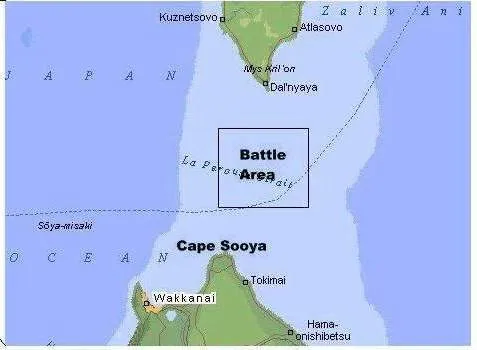 Photo: La Pérouse Strait, via piercingtheveilofillusion.com
Without waiting for confirmation or conducting a thorough investigation, Navy brass made the grim calculation that became standard operating procedure: if a sub missed multiple check-ins in enemy waters, it was presumed lost. The USS Wahoo was officially stricken from the naval register, and 80 crew members were declared killed in action.
The Living Dead Keep Fighting
What the Navy didn't know was that the Wahoo had been operating under strict radio silence, successfully evading detection while continuing its mission. The submarine had actually been sinking Japanese cargo ships and naval vessels throughout the period it was supposedly resting on the ocean floor.
Captain Dudley "Mush" Morton and his crew had no idea they'd been posthumously honored until they intercepted enemy communications mentioning their own sinking. The surreal moment when living sailors heard about their own deaths became submarine legend.
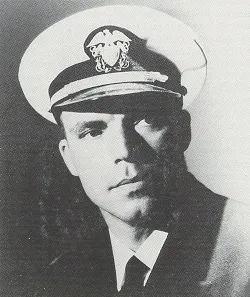 Photo: Captain Dudley "Mush" Morton, via www.warfish.com
Even stranger, the crew noticed their mail had stopped arriving during supply runs to friendly ports. What they initially attributed to wartime postal delays was actually the result of their official death certificates. Dead men, after all, don't receive letters from home.
The Awkward Art of Un-Sinking a Submarine
When the Wahoo finally broke radio silence to report its continued existence, Navy communications officers initially thought they were receiving transmissions from a Japanese trick or a ghost. The submarine's call signs were supposed to be at the bottom of the sea, not requesting permission to return to port.
The bureaucratic scramble that followed was unprecedented in naval history. How do you officially resurrect an entire submarine crew? The Navy faced the awkward task of reversing death certificates, reinstating pay that had been stopped, and explaining to grieving families that their loved ones were actually fine.
Insurance companies that had already paid out life insurance benefits found themselves in the bizarre position of having to claw back payments from widows who weren't actually widows. The Veterans Administration had to reverse pension payments to parents of sons who were still fighting.
The Real Tragedy Hidden in the Mix-Up
The story takes a darker turn when you realize the Navy's mistake wasn't entirely wrong—just premature. The real USS Wahoo was indeed sunk by Japanese forces, but it happened several weeks after the official death date.
In a cruel twist of fate, the submarine that had survived its own funeral was actually destroyed in the same general area where the Navy had initially presumed it lost. Captain Morton and his crew, who had briefly lived as their own ghosts, were killed in action just days after the Navy had begun the process of bringing them back from the dead.
Lessons from the Phantom Fleet
The Wahoo incident exposed serious flaws in wartime record-keeping and the dangerous speed with which the military was willing to write off missing personnel. The Navy implemented new protocols requiring multiple confirmations before declaring vessels lost, though the fog of war continued to create similar mix-ups throughout the conflict.
More than 50 submarines were lost during World War II, making the ocean floor a graveyard for thousands of sailors. The brief resurrection of the Wahoo serves as a haunting reminder that in the chaos of global conflict, the line between missing and dead could be terrifyingly thin.
The families who received death notifications, then hope, then final confirmation of loss, experienced a unique form of wartime trauma that military psychologists are still studying today. They grieved twice for the same loss, making the USS Wahoo's story one of the war's most psychologically complex casualties.