The Border Town That Double-Dipped on Water Bills — and Both Countries Said Thank You
When Geography Gets Complicated
There's a special kind of bureaucratic absurdity that can only happen in places where mapmakers got creative. Boundary Falls, a logging community of 347 residents straddling the Washington-British Columbia border, discovered this firsthand when they accidentally paid their water bills to two different countries for nine years straight.
 Photo: Boundary Falls, via www.fit-plus.info
Both the United States and Canada cashed every single check.
The Town That Couldn't Pick a Side
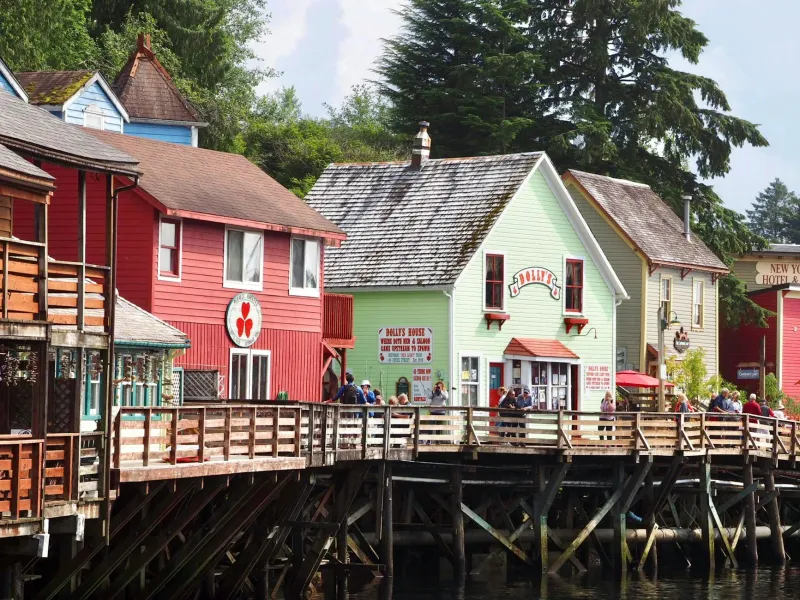
Boundary Falls earned its name honestly — it literally straddles an international border, with Main Street serving as the dividing line between nations. Houses on the north side wake up Canadian; houses on the south side wake up American. The town's water system, installed in 1903, ignored these political niceties entirely, drawing from a mountain spring that nobody bothered to survey properly.
This geographic confusion created a bureaucratic nightmare that wouldn't surface for decades. The water system served both sides of town equally, but nobody could agree which government should regulate it, tax it, or bill for it.
In 1908, both governments solved this problem by doing what governments do best: they each decided it was their responsibility and started billing accordingly.
The Invoices That Kept Coming
Every January, like clockwork, Boundary Falls received two water bills. One arrived via the U.S. Postal Service, printed on official Washington State letterhead, demanding payment for "municipal water services." Three days later, a nearly identical invoice would arrive from the British Columbia Public Utilities Commission.
The amounts were suspiciously similar — usually within a few dollars of each other. Both bills looked official. Both included detailed usage calculations and stern warnings about late payment penalties.
So the town paid both.
"What were we supposed to do?" recalled Martha Hendricks, whose father served as the town's volunteer bookkeeper during the double-billing years. "We were just a logging town. Nobody wanted to pick a fight with two governments over a water bill."
The System That Worked Too Well
The double-billing arrangement created an accidentally perfect system. Both governments received regular payments for services they believed they were providing. Both sets of bureaucrats filed their paperwork, balanced their books, and moved on to other matters.
Boundary Falls, meanwhile, enjoyed remarkably reliable water service. When pipes froze on the American side during the brutal winter of 1913, Canadian maintenance crews showed up to fix them. When a landslide damaged the intake on the Canadian side in 1915, Washington State workers cleared the debris.
Each government assumed the other was handling routine maintenance. Neither wanted to admit they weren't sure which side of the border the actual infrastructure was on.
The Audit That Changed Everything
The double-billing might have continued indefinitely if not for a particularly thorough Canadian bureaucrat named Harold Pembridge. In 1917, Pembridge was conducting a routine audit of British Columbia's utility revenues when he noticed something odd about Boundary Falls.
 Photo: Harold Pembridge, via thumb-lvlt.xhcdn.com
The tiny community was paying exactly what they should — but their payment records showed they were also sending identical amounts to Washington State.
Pembridge's investigation revealed the embarrassing truth: for nearly a decade, both governments had been collecting payment for the same water system. Neither had bothered to verify whether they actually owned or operated the infrastructure they were billing for.
The Diplomatic Solution
What followed was a masterclass in bureaucratic face-saving. Both governments quietly acknowledged the error in internal memos while publicly pretending nothing unusual had happened. The solution they devised was elegantly Canadian: they agreed to split the difference.
Starting in 1918, Boundary Falls would pay a single bill to whichever government happened to send their invoice first each year. The two governments would settle up privately, with the "winner" sending half the payment to the "loser."
This arrangement satisfied everyone's need to avoid admitting they'd been accidentally scamming a tiny logging town for nine years.
The Money Trail
When historians finally calculated the numbers in the 1970s, they discovered that Boundary Falls had overpaid for their water service by approximately 2,300% during the double-billing years. The excess payments — worth about $47,000 in today's money — had been quietly absorbed into both governments' general funds.
Neither government offered a refund. Both pointed out that Boundary Falls had received excellent water service during those years, with maintenance crews from two countries ensuring the system never failed.
"They got their money's worth," one former Canadian official noted dryly in a 1978 interview.
The Legacy
The Boundary Falls double-billing incident led to significant reforms in how both countries handled border utilities. New protocols required actual surveys to determine which side of the border infrastructure was located on before any bills could be issued.
The town itself survived the logging industry's decline and eventually merged with a larger municipality in 1962. The old water system still operates, now clearly on the Canadian side after a proper survey in 1943.
The only remaining evidence of the double-billing years is a dusty file cabinet in the British Columbia Archives, containing nine years of duplicate payment records and a terse note: "Do not discuss with media."
 Photo: British Columbia Archives, via fr.web.img5.acsta.net
Sometimes the best solution to an embarrassing bureaucratic mistake is to quietly agree that it never happened — and hope nobody ever goes digging through the old files.